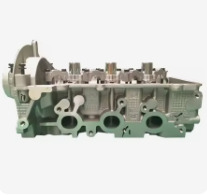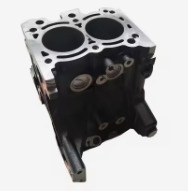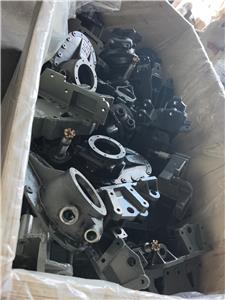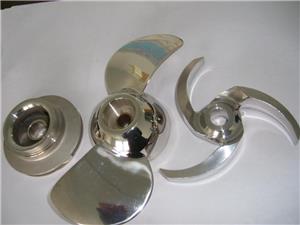
Aluminum Casting Parts For Commercial Vehicles

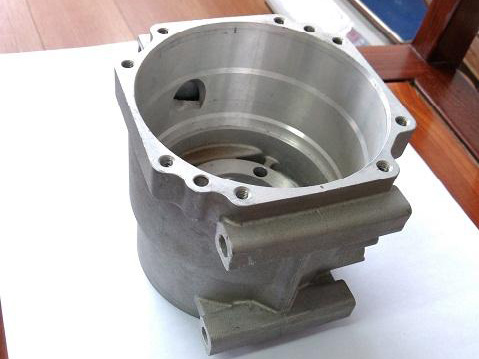
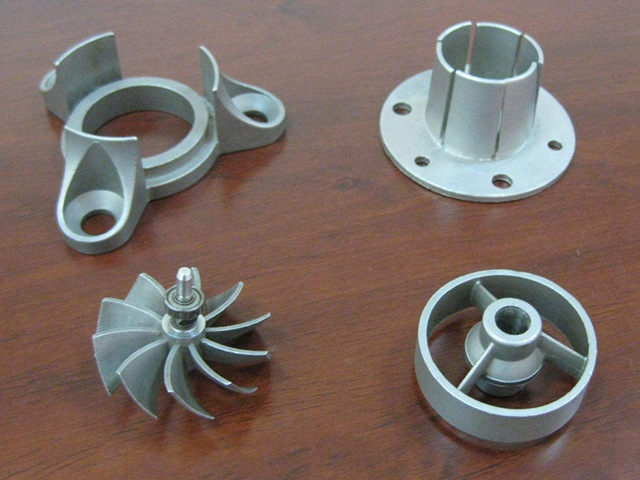
- Yaojia
- china
- 25 days
- 3 Million Tons
Yaojia Trading provides advanced aluminum casting solutions tailored to the rigorous demands of commercial vehicles.
Commercial Aluminum Castings for Commercial Vehicles – Lightweight, Durable, Cost-Effective
One problem we hear from fleet operators and commercial vehicle OEMs
For large commercial vehicles that travel up to and beyond several hundred thousand kilometers a year, their dead weight is the direct source of financial loss.
Each added kilogram to the structural weight means increased fuel consumption or loss in the vehicle's loading capacity within the legal limits. After the truck, trailer or bus passes a lifetime, they are still being charged from these minor weight penalties that have grown in size. That's why fleet operators, commercial vehicle OEMs as well as Tier1 suppliers all tell us about this issue.
Global commercial vehicle OEMs are now gradually shifting from traditional grey cast iron and structural steel components to premium quality aluminum castings.
We understand the Yaojia solution.
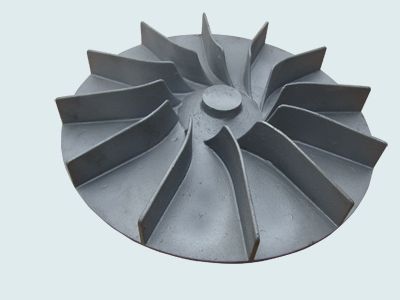
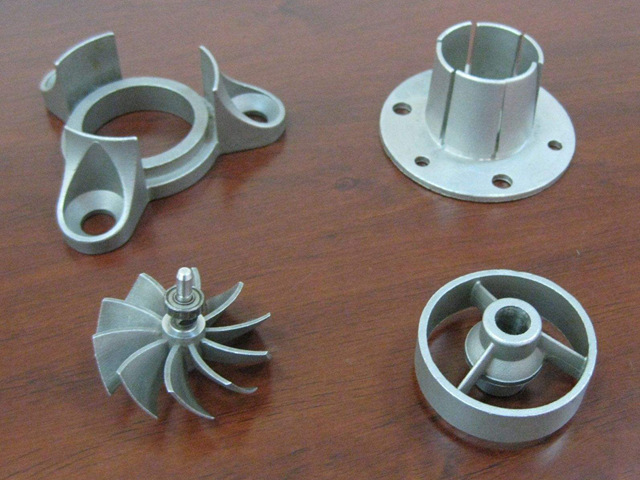
Yaojia's state-of-the-art HPDC, LPDC as well as Gravity Casting manufacturing of premium aluminum castings enables the production of complex components in very small quantities at the beginning of the manufacturing chain as compared to other manufacturing processes.
All the casting processes are followed by T6 treatment and/or machining of castings for finishing of the cast details which are later machined to final shapes and dimensions. Truck manufacturers can save their money by having a significantly lighter aluminum replacement for conventional steel parts. Weight savings could be up to 40% whereas no fatigue strength, dimensional stability, or long-term reliability is compromised.
Not only a casting. This part will definitely help you reduce your operational expenses.
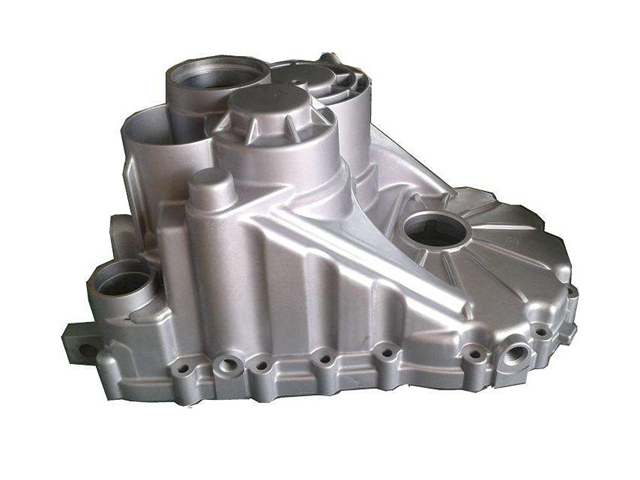
Technical specifications
| Parameter | Specification | Standard / method |
|---|---|---|
| Material alloys | A356, A380, ADC12, AlSi10Mg, custom high-strength alloys | ASTM B108 / EN AC-42100 |
| Tensile strength | 230–320 MPa (as-cast), up to 350 MPa (T6) | ISO 6892-1 |
| Yield strength | 140–250 MPa | ISO 6892-1 |
| Elongation | 2%–10% | Ductility optimized |
| Casting processes | HPDC, LPDC, gravity casting | ISO 8062-3 |
| Part weight range | 0.5 kg to 80 kg (single component) | Structural & enclosure parts |
| Dimensional tolerance | CT6–CT8 (HPDC), CT7–CT9 (LPDC/gravity) | ISO 8062 |
| Surface finish | As-cast Ra 3.2–6.3μm, machined Ra 1.6–3.2μm | Precision CNC machined |
| Pressure integrity | Leak testing up to 8 bar standard | ASTM E505 / internal standards |
Application areas across commercial vehicle systems
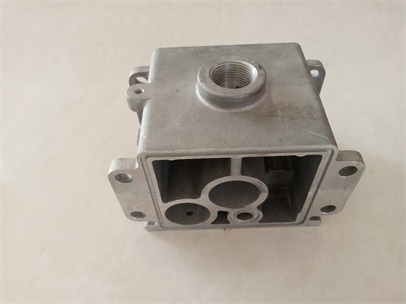
Drivetrain and powertrain assemblies: Main gear and transmission housing enclosures, engine oil sump assemblies, engine mounting brackets, charge pipes and turbocharger ducts, flywheel housing structures
Chassis and suspension systems: Fifth wheel mounting structures, steering knuckles and pivot arms, air suspension spring mounting brackets, crossmember and subframe connection nodes, suspension mounts
Cab and vehicle body structures: Cab door frame castings, console support beams, dashboard bracketings, A and B pillar reinforcements, cab tilt mechanism brackets, modular floor support assemblies
Brake and pneumatic systems: Air compressor housings, pneumatic valve bodies and manifold blocks, air tank braces, actuator housing and caliper supports
Electric commercial vehicles (EV/HEV platforms): Battery pack enclosures, motor housings and end shields, power electronics housings, thermal management manifolds, high-voltage charging socket mounts
Key procurement priorities for commercial vehicle parts
Fatigue life and structural integrity: Eliminating early fatigue failure under heavy payload conditions
Total cost of ownership (TCO): Decreasing operating costs per ton-mile over hundreds of thousands of duty cycles
Serviceability and downtime reduction: Ensuring predictable wear rates and reliable mating interfaces
Manufacturing consistency: Strict batch-to-batch repeatability in material chemistry, internal density, and CNC machining tolerances
Quality control — our 5-step inspection process
For commercial vehicle aluminum castings, quality control is built into every stage of production. We follow a structured inspection process that ensures every part meets drawing requirements before it ships.
| Step | Inspection stage | What we check | Method | Control standard |
|---|---|---|---|---|
| 1 | Incoming material verification | Material grade, dimensions | Spectrometer, micrometer | 100% traceability; dimensions within tolerance |
| 2 | First-article inspection | Full dimensional check on first casting | CMM, thread gauges, hardness tester | All features per drawing |
| 3 | In-process inspection | Critical dimensions, casting quality | Sampling, visual inspection | Key features checked per control plan |
| 4 | Final dimensional inspection | Full dimension check on finished part | CMM, profilometer, hardness tester | 100% critical dimensions verified |
| 5 | Final visual & documentation review | Surface finish, coating, packaging | Visual inspection | Zero defects; all documentation complete |
Key inspection equipment: CMM, hardness tester, spectrometer, X-ray (as required), leak test equipment, visual inspection stations
What we deliver: Material certificates, dimensional reports, CMM data, hardness test results, NDT reports, leak test reports, full traceability, customer-specific documentation
Ordering and delivery
To get a quote, send us:
2D drawing, 3D CAD model, or physical sample
Material specification and grade
Quantity required
Machining and surface treatment requirements
Inspection or certification requirements
Delivery schedule expectations
MOQ: 50 pieces for standard production. Prototype quantities and small batches can be discussed.
Payment: 30% deposit; balance after inspection video confirmation (T/T).
Shipping: FCL or LCL available. VCI anti-rust treatment, protective wrap, ISPM 15-compliant reinforced plywood crates.
Lead time: Standard production: 15–25 working days. Complex geometries or special materials: 25–40 working days. We confirm exact lead time at order placement.
Warranty
We are responsible for 12 months from the time of delivery. If a part fails due to manufacturing defects like - Casting defect, machining error, wrong materials - we replace the part or give credit. Wear parts, broken impact part or modified ones from delivery? Not covered.
We give straight answers whether the warranty is applicable or not.
For making claims, you can send us images of the part, the part number, and the order number. After that we will respond within 48 hours.
If a production batch is faulty, we remould the batch keeping all the standards in the original work same, like drawing, material and tolerance.
If you have any questions? About materials, specifications, machining instructions, drawings, etc., we directly respond to you. Never a dead end.
About Yaojia Trading
Luoyang Yaojia Trading Co., Ltd. has over 20 years of practical experience in casting and metal component manufacturing. The company was founded by Mr. Xi Xianmin, who has more than 25 years of experience in foundry production and engineering management.
Our capabilities:
18,000m² modern production base
~68 employees
16-person R&D team with two senior engineers
Annual casting and machining capacity:15,000 tons
IATF 16949 quality management certification
Integrated services:
Aluminum casting (HPDC, LPDC, gravity)
Multi-axis CNC machining
Heat treatment (T6)
Surface treatment and coating
Inspection and CMM
Leak testing
Supply-chain coordination
Customers & markets:
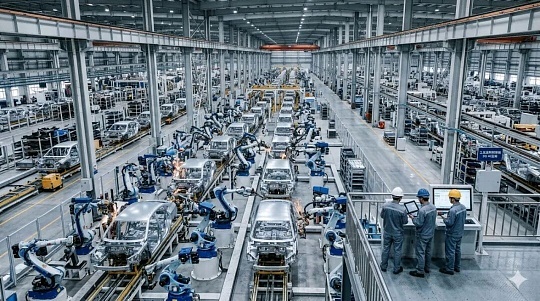
Tier 1 supplier to BYD, Chery, Great Wall Motors
Commercial vehicle OEM supply
Products exported to South Korea, Japan, USA, Australia, Germany
Exhibition
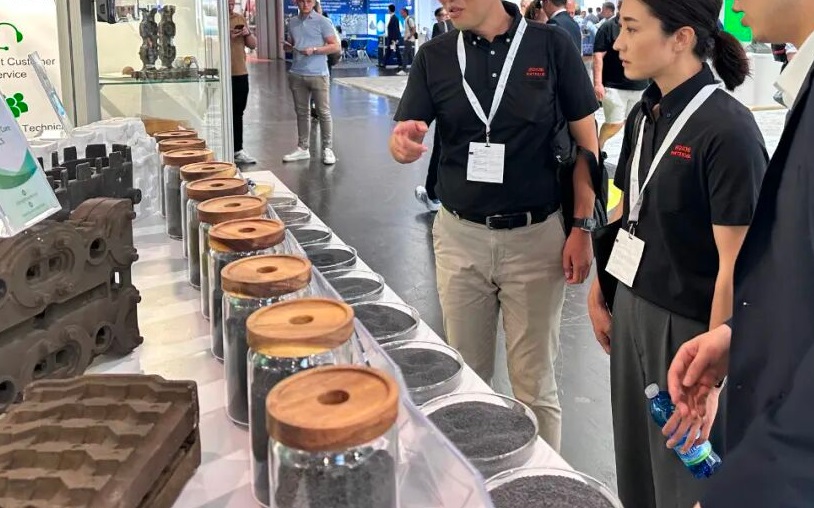
In May 2024, Yaojia Trading exhibited at the China International Foundry Technology and Equipment Exhibition in Shanghai, showcasing casting accuracy and comprehensive industry-chain service capabilities.
FAQ
Q1: In addition to weight, are aluminum castings weaker than other metals?
Actually, not. If the alloy and the design are proper, aluminum castings have good structural properties and at the same time are quite lighter.
Q2: Which are the main vehicle systems for which aluminum castings are used?
Drive train, chassis, vehicle cab, compressed air systems, and electric vehicles have large areas where aluminum castings come up.
Q3: Are you working on the electric truck projects?
Absolutely, we have various applications such as manufacturing of battery parts, housing motors as well as assemblies for cooling, and other related parts of the electrification system, we are involved in the production of all of these components.
Q4: Can we get the castings in machined state?
The castings in various finishes, such as cast or partially machined, fully machined, are available for delivery.
Q5: What if we want prototypes?
Prototype batches can be manufactured with minimal quantities.
Q6: How do you guarantee the quality of product?
Methods like dimensional testing, material documentation, X-ray scans, CMM measurements, and other testing are used as specified by the client.
Q7: What is the average time you need?
Normal lead : 15 to 25 working days.
Complex one takes from 25 to 40 working days.
Lead time is set at order confirmation.
Q8: Minimum order quantity?
50 pieces will do for standard production. Small quantities and samples can also be discussed with you.
Q9: What annual output do you have?
Casting and CNC machining operations are covered by our production capacity of 15,000 tons per year.
Q10: How about your certifications?
IATF 16949. We also supply parts to major vehicle manufacturers like BYD, Chery, and Great Wall.
Q11: Approximately how much is the weight reduction?
If we compare our castings to grey iron pieces, the weight saving can be as high as 40%.
Q12: What leak testing facilities are available?
Leak testing for the water under pressure system or differential pressure method of leakage checking is available in the factory as a standard up to 8 bar.
There are four questions you may want to check before making the decision to hire an aluminum casting supplier for commercial trucks:
What aluminum alloys will you advise me to use for heavy-duty commercial vehicle applications?
How accurate will your parts be in their dimensions?
Will you offer to do my part inspections and send along material certificates too?
By shifting from iron components to aluminum parts, how much weight can I save at least?