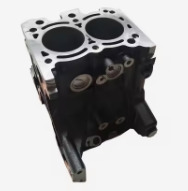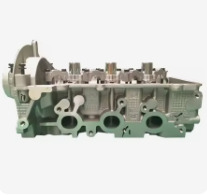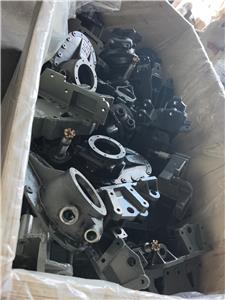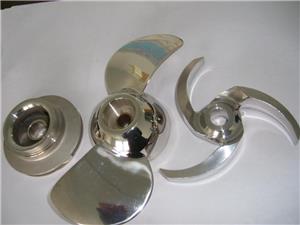
CNC Machined Forging Parts

- Yaojia
- china
- 25 days
- 3 million tons
Yaojia Trading delivers superior CNC machined forging parts that combine the structural integrity of forged materials with the dimensional accuracy of advanced machining.
Machined Forgings – Designed for Machinability, Not Just Shape
One issue we come across regularly from engineers and procurement teams
"A forging looks fine on paper. It's up to standard with the material specification. Its mechanical test results are within the allowable limits. The forging itself is accepted as having no defects in inspection. When it is put into the CNC machine, however, various issues come up almost immediately. One hole bore may lack a sufficient amount of machining stock. One side of the flange may have had to remove a little more than the other side due to it being off-centered in the initial operation. If a part cannot be consistently placed in the fixture, it may still not be a bad thing. At times, a bore that used to be of a good dimension has, after heat treatment, slightly changed in position, causing it to be unsuitable for a certain machining work."
In different sectors - automotive, heavy equipment, and industry-related - engineers, quality managers, and procurement teams tell me about similar situations. They are not isolated problems. They are often a consequence of separating forging and machining operations.
The Yaojia method:
Forge is not designed only in view of forging drawing but finished product characteristics. We plan all three consecutive stages (forge, heat treatment, and machining) together without any interruption. The end is very easy to define: to deliver a forge workpiece with features that it can be not only inspectable but also fully adaptable to machining.
More than just a forging. A part specifically for your finish machining setup.
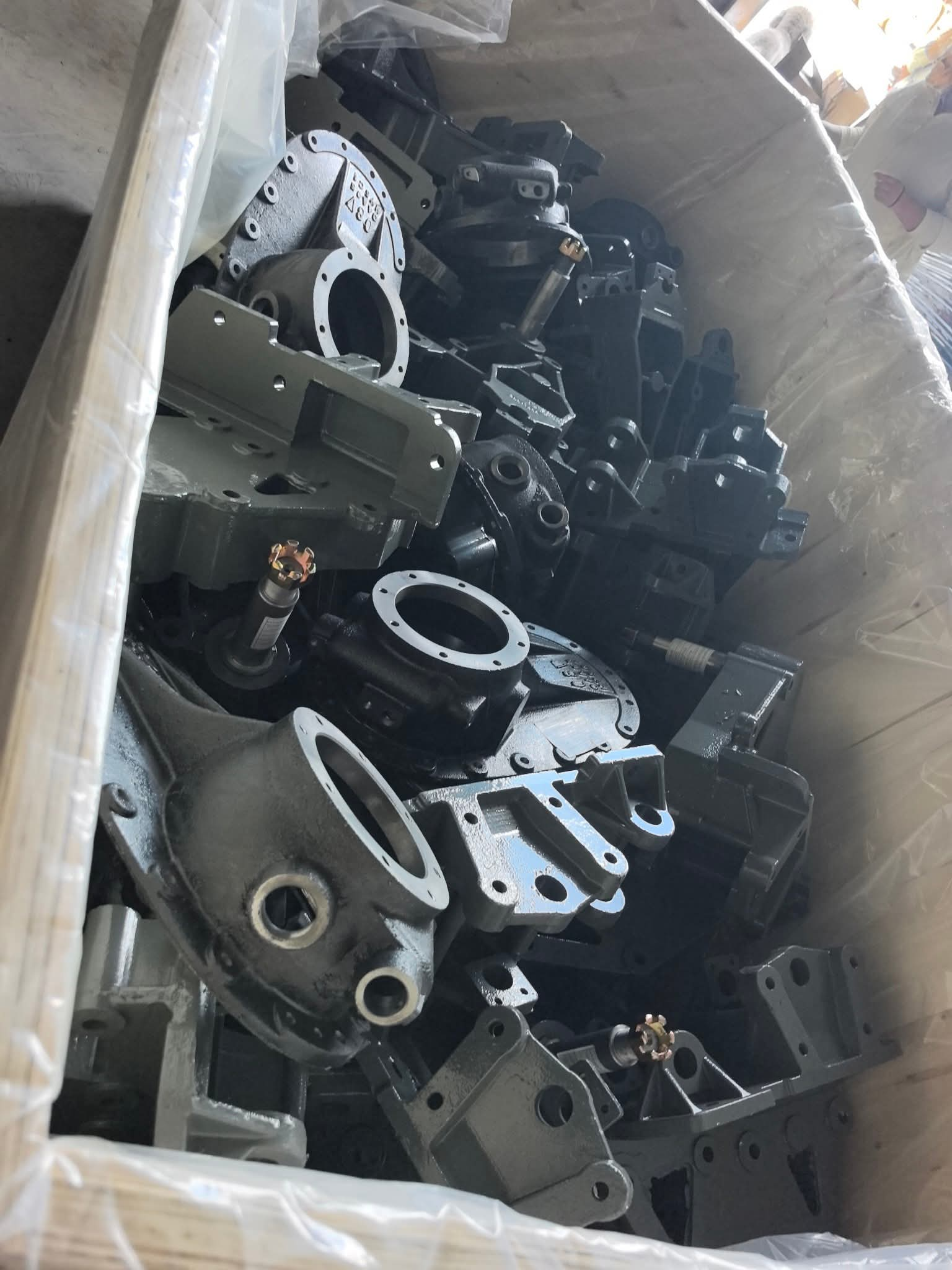
Things that could fail even if machining is not started yet
Shortage of material near holes: If there is a lack of material near important holes and bearing seats, the machinist may not manage even the desired dimensions.
Low amount of stock on flange faces: Non-uniform thickness on the flange area results in heavy cutting on one side - which causes vibration, tool interruptions, rapid tool damage, and problems in keeping the desired surface texture.
Bad references: Lack of common points of measurement (common datums) without which a machine that is supposed to work on its own cannot give similar results each time. The workpieces will have to undergo realignment or repositioning which consumes the time and increases the errors in position.
No consideration of the effects of heat-treatment in design: If the change in size after a material is heat treated is not the focus of the initial design, then there will be a wrong allowance which will make the part distorted to a level that it is impossible to machine.
How we solve it differently
| Common industry practice | Our practice |
|---|---|
| Forging suppliers deliver blanks to drawing dimensions without knowing where final machined surfaces will land. | We overlay finished part geometry onto the forged blank in CAD before production begins. Machining stock is placed exactly where it is needed — not just "within overall tolerance." |
| Machining teams find fixtures cannot locate consistently. | We design forging datums and machining fixtures in parallel. The same reference points used for forging inspection serve as machining locating surfaces — eliminating datum translation errors. |
| Heat treatment is merely described as "Quench & Temper" without considering how it affects subsequent machining. | We measure distortion by sampling blanks after heat treatment, then compensate by adjusting pre-heat-treatment stock in areas of high deformation. Critical bores get extra material in the direction of expected distortion. |
| Problems appear at final inspection — then the blame game begins. | We execute an intermediate inspection of the forged blank before machining. If a blank cannot produce a successful end product, we stop — no machining cost loss for an unfinishable part. |
| Changes in the drawing require separate quoting from forging and machining suppliers. | A single drawing change updates forging, heat treatment, and machining processes simultaneously. No miscommunication between different service providers. |
Why it matters to your operation
| Your risk without this approach | Our guarantee |
|---|---|
| Finished parts scrapped from inadequate stock on critical features | Minimum stock per feature is confirmed before forging tooling is cut — no unexpected thin walls or short bores |
| Repeated rework and extra setups chasing inconsistent datums | First-article runs use the same datum scheme planned at the forging stage — rework setups cut down or eliminated |
| Disputes between forging and machining vendors over defect ownership | Single-source accountability — we own the full chain from raw material through finished part. No finger-pointing. |
| Long lead-time hits when a drawing change comes through | One technical review updates all process steps at once — no separate RFQs or vendor coordination delays |
Quality control — our 5-step inspection process
For forged and machined components, quality control is built into every stage of production. We follow a structured inspection process that ensures every part meets drawing requirements before it ships.
| Step | Inspection stage | What we check | Method | Control standard |
|---|---|---|---|---|
| 1 | Incoming material verification | Material grade, dimensions | Spectrometer, micrometer | 100% traceability; dimensions within tolerance |
| 2 | First-article inspection | Full dimensional check on first forged/machined part | CMM, thread gauges, hardness tester | All features per drawing |
| 3 | In-process inspection | Critical dimensions, forging quality | Sampling, visual inspection | Key features checked per control plan |
| 4 | Final dimensional inspection | Full dimension check on finished part | CMM, profilometer, hardness tester | 100% critical dimensions verified |
| 5 | Final visual & documentation review | Surface finish, coating, packaging | Visual inspection | Zero defects; all documentation complete |
Key inspection equipment: CMM, hardness tester, spectrometer, thread gauges, ultrasonic testing, magnetic particle inspection, dye penetrant inspection, X-ray inspection
What we deliver: Material certificates, dimensional reports, CMM data, hardness test results, NDT reports (if required), full traceability, customer-specific documentation
Process capability
| Parameter | Specification |
|---|---|
| Materials | Carbon steel, alloy steel, stainless steel, aluminum, titanium, superalloys |
| Forging processes | Open-die, closed-die, ring rolling, upset forging |
| CNC capability | 3–5 axis, turning, drilling, boring, threading, grinding |
| Part size range | Max 1500mm (L) × 800mm (W) × 600mm (H) |
| Dimensional tolerance | Machined: ±0.02–0.1mm (standard), ±0.01mm (precision) |
| Surface roughness | Machined: Ra 0.8–3.2μm / Ground: Ra 0.4μm and finer |
| Heat treatment | Quenching & tempering, annealing, normalizing, case hardening, nitriding |
| NDT | Ultrasonic testing, magnetic particle, dye penetrant, X-ray inspection |
Why finished forgings often get customers' attention
Buying forging parts is only part of it. The real benefit is having a part you can put in a machine or structure without thinking about what it does at that point.
Integrating forging and machining with a well-planned production timeline allows clients to remove:
Repeated handoffs between multiple contractors
Dimensional discrepancy conflicts
Communication delays during the process
Resource allocation problems that cause delay
Sites visits between multiple contractors for transfer of parts
Additional machining caused by different manufacturing assumptions
By removing these from the ongoing production cycle, value is created like lowering part price.
Request and Delivery
The first step is to contact us with the following details to get an accurate quote:
2D drawing, 3D CAD model, or physical sample if available
Technical standards and type
The number you need
Details of machining processes and heat treatment requirements
Inspection or certification procedures
Your thoughts on the delivery schedule
Min.Order Qty.: for standard production it’s 50 pieces.
Payment: 30% in advance, the remainder after receiving inspection video confirmation (T/T).
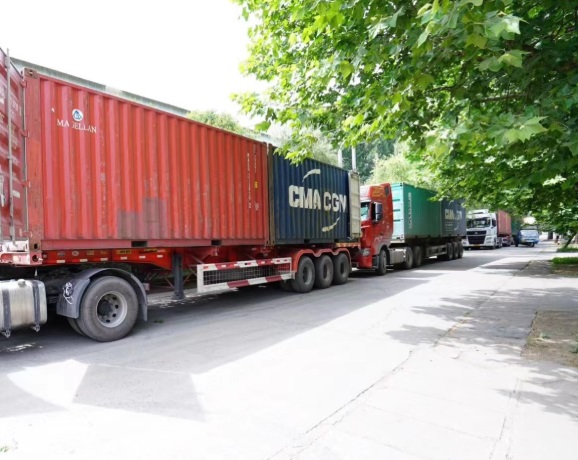
Transportation Method: Full Container Load (FCL) and Less than Container Load (LCL) are supported. Also, we do protective packaging and strong wooden cases. The details are negotiated upon the order placement.
Manufacturing Period: Standard production: 15-25 working days. Special cases like complex shapes or exotic materials (e.g., precision forgings): 25-40 working days.
Warranty
We are responsible for 12 months from the time of delivery. If a part fails due to manufacturing defects like - Casting defect, machining error, wrong materials - we replace the part or give credit. Wear parts, broken impact part or modified ones from delivery? Not covered.
We give straight answers whether the warranty is applicable or not.
For making claims, you can send us images of the part, the part number, and the order number. After that we will respond within 48 hours.
If a production batch is faulty, we remould the batch keeping all the standards in the original work same, like drawing, material and tolerance.
If you have any questions? About materials, specifications, machining instructions, drawings, etc., we directly respond to you. Never a dead end.
About Yaojia Trading
Luoyang Yaojia Trading Co., Ltd. has over 20 years of practical experience in casting, forging, and metal component manufacturing. The company was founded by Mr. Xi Xianmin, who has more than 25 years of experience in foundry production and engineering management.
Our capabilities:
18,000m² modern production base
~68 employees
16-person R&D team with two senior engineers
Annual forging, casting, and machining capacity:15,000 tons
Integrated services:
Forging (open-die, closed-die, ring rolling, upset forging)
Casting
Multi-axis CNC machining
Heat treatment (quenching, tempering, annealing, normalizing, case hardening, nitriding)
Surface treatment and coating
Inspection and CMM
NDT (ultrasonic, magnetic particle, dye penetrant, X-ray)
Supply-chain coordination
Customers & markets:
Tier 1 supplier to BYD, Chery, Great Wall Motors
Automotive OEM supply
Heavy equipment and industrial sectors
Products exported to South Korea, Japan, USA, Australia, Germany
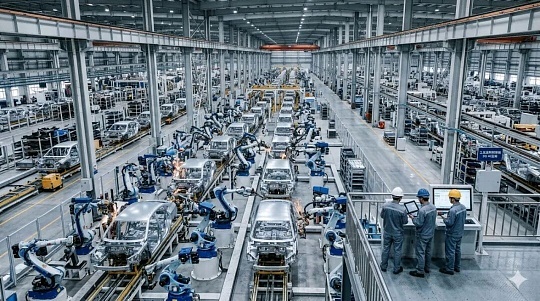
Exhibition
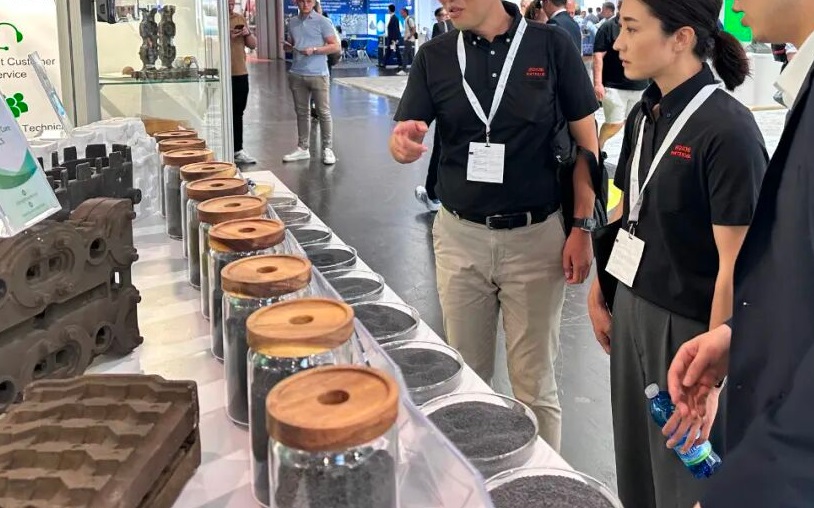
In May 2024, Yaojia Trading exhibited at the China International Foundry Technology and Equipment Exhibition in Shanghai, showcasing forging and casting accuracy and comprehensive industry-chain service capabilities.
FAQ
Q1: Can you produce according to customer drawings?
Yes, no problem. We manufacture products based on drawings, CAD files, technical specs, or physical samples.
Q2: What should I provide for a quote?
It would help for an accurate quote if you can provide a drawing, details about the material, annual demand in a rough estimation, quantity per order, information on heat treatments, the machining processes, quality inspection requirements, and the timing of the delivery.
Q3: What materials do you work with for forging?
Mild steel, alloy steel, stainless steel, aluminum, titanium, and supperalloys.
Q4: What types of forging processes are available?
We offer open-die, closed-die, ring rolling, and upset forging.
Q5: What is the biggest dimensions for forgings that you can handle?
L -1500mm. W - 800mm. H - 600mm at max.
Q6: What tolerances can you reach?
Machined: standard is ±0.02-0.1mm, precision is ±0.01mm
Q7: What surface finishes can you get?
Machined: Ra 0.8-3.2μm. Ground: Ra 0.4-μm or finer
Q8: Are you a capable vendor delivering heat treatment?
We do heat treatment such as Tempering, Annealing, Quenching, Normalizing, Surface Hardening by Flame/Induction, and Case Hardening by Cyaniding, Carburizing and Nitriding
Q9: What NDT capabilities do you have?
Ultrasonic testing, magnetic particle inspection, dye penetrant inspection, and X-ray inspection.
Q10: What is your typical lead time?
Standard: 15–25 working days. Complex (including precision forgings): 25–40 working days. Confirmed at order placement.
Q11: What is your MOQ?
50 pieces for standard production. Prototypes and small quantities can be discussed.
Q12: What is your annual production capacity?
15,000 tons per year, covering forging, casting, and CNC machining.
Four questions to ask any forging + machining supplier
Do you design the forging with the final machining process in mind?
How do you handle datum consistency between forging inspection and machining fixturing?
How do you compensate for heat treatment distortion in the forging allowance?
Do you own the full process chain — or do you outsource machining?
We have answers ready. Ask us.