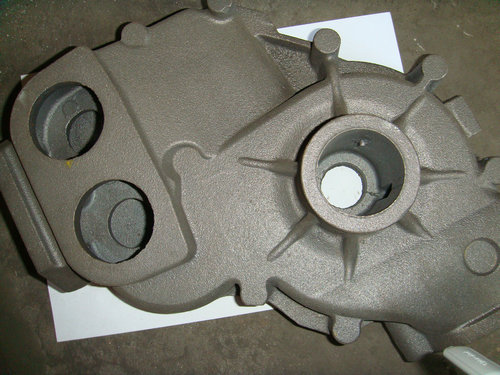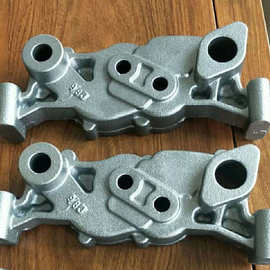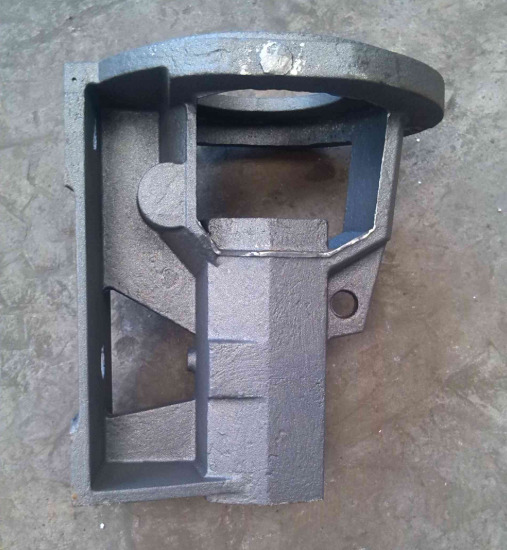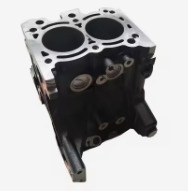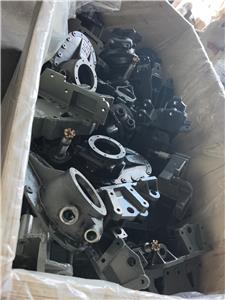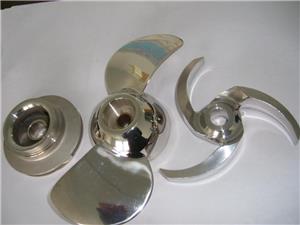
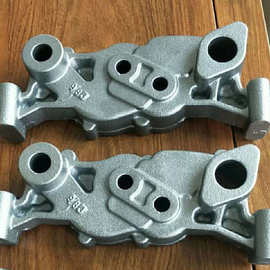
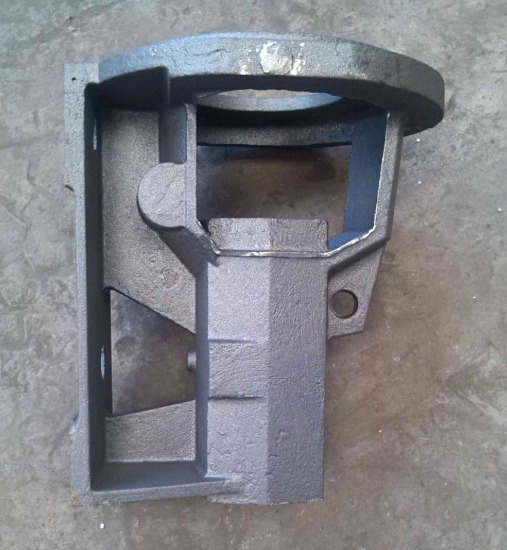
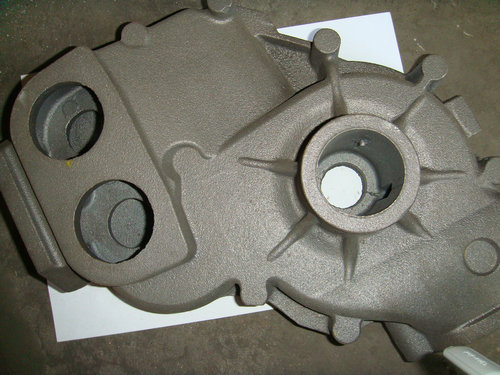
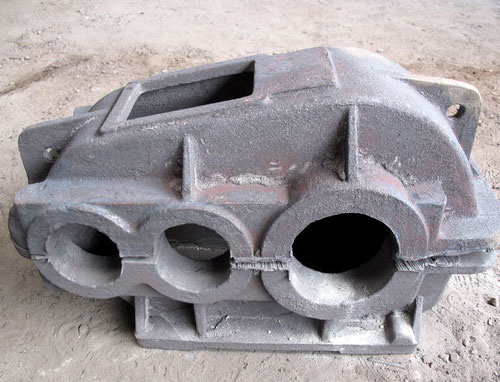
Cast Iron Parts For Agricultural Machinery

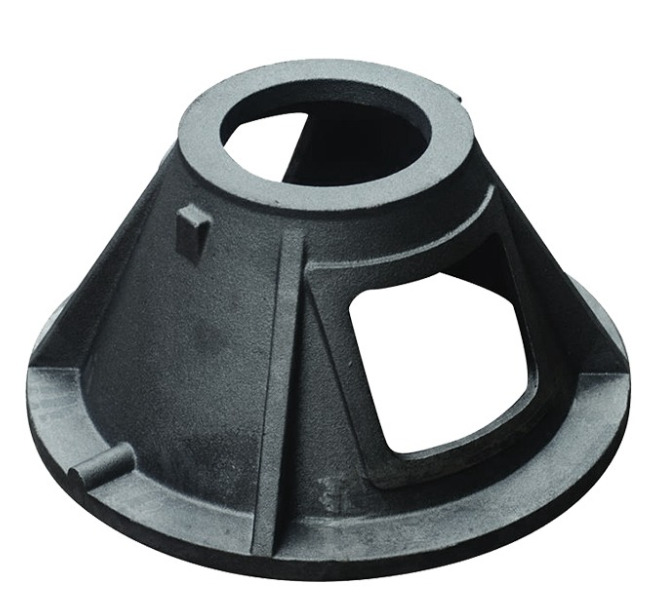
- Yaojia
- china
- 25 days
- 3 million tons
Yaojia Trading specializes in manufacturing robust cast iron parts designed for the harsh operating conditions of modern agricultural machinery. From soil preparation to harvest, our components deliver reliable performance under heavy loads, abrasive environments, and variable weather conditions, helping maximize equipment uptime and productivity.
Agricultural Cast Iron Components – Built for the Field, Engineered to Last
One problem we hear from farm equipment manufacturers and aftermarket suppliers:
"A single hour that a harvester spends nonoperational during breakdown in the field is enough for the farmer to lose around $500 to $1000. Repair and towing charges come on top of that. The break of a single part like a bracket or housing will lead to downtime of the whole operation throughout season."
We receive the same explanation from OEM engineering staffs, farm equipment producers, and aftermarket parts suppliers. The problem wasn't that the part was weak. It was that the part was heavier than necessary, which accelerated fatigue, made the installation more difficult, and placed a strain on neighboring components unnecessarily.
If a heavy cast iron part fractures on site, it's about much more than the part itself. In terms of total cost, it includes the equipment downtime, the lost opportunity for harvest, and the effort it'll take to move the machinery back to work.
The Yaojia Way:
Yaojia Trading is in constant contact with the customers and design team in China for custom castings that fit their exact requirement. The components are tailored towards agricultural machinery only. The casting process is such that it can be done to a light weight standard without sacrificing strength and rigidity.
However, it's important to note that such a result only ensues after the casting design, type of alloy to use, and the cutting method have all been determined together — in other words, not as successive steps. That's the very way we work for the agricultural projects at Yaojia Trading.
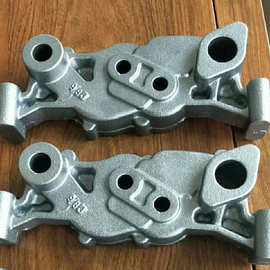
Cast iron casting capabilities
The material and casting route are selected according to the part's load, wear conditions, geometry, and machining requirements.
| Parameter | Typical scope |
|---|---|
| Cast iron | Gray iron, ductile iron, and specified alloy cast irons |
| Common grades | ASTM or equivalent grades per project requirements |
| Casting methods | Green sand, resin sand, and shell molding |
| Component weight | Confirmed according to part geometry and casting equipment |
| Dimensional control | According to customer drawings and applicable casting standards |
| Machining | CNC milling, turning, drilling, boring, and threading |
| Surface treatment | Shot blasting, primer, painting, or other specified finishes |
| Inspection | Visual, dimensional, material, and project-specific inspection |
| Heat treatment | Normalizing, tempering, or other treatments where required |
Final material grades, tolerances, and inspection requirements are confirmed during the technical review of each project.
Where cast iron parts are used in agricultural machinery
Agricultural machinery operates in environments with dust, moisture, vibration, impact, and repeated loading. Cast iron remains useful where strength, wear resistance, vibration damping, and production cost all need to be considered.
Soil preparation equipment
Typical cast components include: bearing carriers, mounting brackets, cultivator supports, plow-related components, structural connection parts.
Harvesting machinery
Harvesting equipment may operate for extended periods during a short seasonal window. Common applications include: auger housings, grain-handling components, threshing-system parts, bearing supports, structural castings.
Power transmission
Cast iron is widely used for components that support or enclose power-transmission systems, such as: gearbox housings, PTO-related components, bearing housings, drive-system supports, pulley and coupling components.
Irrigation and fluid systems
Depending on the application and operating conditions, cast components may also be used for: pump housings, valve bodies, manifolds, connection components, water-control equipment.
Why agricultural equipment manufacturers use cast iron
Material selection for farm machinery is usually a balance between performance and production economics. Cast iron can offer several useful characteristics:
Good load-bearing capability
Wear resistance for suitable applications
Vibration damping
Stable performance in heavy-duty structures
Good machinability
Cost-effective production for many component designs
The appropriate grade still depends on the actual load, temperature, wear conditions, and design of the component. Yaojia evaluates these factors before confirming the material for production.
Designed for OEM and replacement parts
Agricultural equipment does not always follow a simple high-volume purchasing cycle. A machinery manufacturer may need castings for a new equipment program, while a parts distributor may need replacement components for machines already operating in the field. Older equipment can also require custom parts when the original component is no longer readily available.
Yaojia can support:
OEM production
Replacement and aftermarket parts
Prototype samples
Pilot production
Small-batch orders
Repeat production programs
For replacement projects, customers can provide an existing part or sample when original drawings are unavailable. The available technical information can then be reviewed before production.
Quality control — our 5-step inspection process
For agricultural cast components, quality control is built into every stage of production. In the field, a failed part means downtime and lost revenue. We follow a structured inspection process that ensures every part meets drawing requirements before it ships.
| Step | Inspection stage | What we check | Inspection method | Control standard |
|---|---|---|---|---|
| 1 | Incoming material verification | Material grade, dimensions, surface condition | Spectrometer analysis, micrometer, calipers | 100% material traceability; dimensions within drawing tolerance |
| 2 | First-article inspection (FAI) | Full dimensional check on first cast/machined part | CMM, thread gauges, hardness tester | All features within drawing tolerance; material properties verified |
| 3 | In-process inspection | Critical dimensions, casting quality, machining accuracy | Sampling inspection, visual inspection | Key features checked per process control plan; defects addressed before they spread |
| 4 | Final dimensional inspection | Full dimension check on finished parts | CMM, profilometer, hardness tester | 100% of critical dimensions verified; tolerance per drawing |
| 5 | Final visual & documentation review | Surface finish, coating quality, packaging condition | Visual inspection, coating thickness gauge | Zero visible defects; all documentation complete |
Key inspection equipment:
CMM (Coordinate Measuring Machine) — checking for precise dimension
Hardness tester — verifying the material property
Spectrometer — confirming the material grade
Thread gauges (go/no-go) — verifying the thread quality
Visual inspection stations — checking for surface and coating quality
Our commitment:
Material certificates (if requested)
Reports showing the dimensional results of inspection
CMM measurement data (mainly for critical features)
Hardness tester data
Documentation showing traceability throughout the whole process
Documentation as specified by the customer
A casting becomes a piece
This process is usually multi-staged. For instance, a casting will need further machining after casting like drilling, tapping, turning, etc., to the finished dimensional size.
We also review, before the manufacturing of the project, for a variety of factors:
Material
Casting structure
Machining extra
Degree of accuracy to be attained
Mounting surfaces
Inspection requirements
Surface treatment
A comprehensive technical review helps us to detect issues of manufacturing before the preparation of the tools and the start of the mass production.
Process and quality management
It is important that agricultural machine parts are produced reliably as it often leads to high costs if a part has to be replaced or assembled after the unit is already working in the field.
On the basis of your project, our product inspection may include:
Material verification
Visual check of casting
Checking and measuring of size
Checking of machining
Ductility or mechanical-property tests
If required then NDT (non-destructive testing)
Records of production and testing
It is up to your specifications that your drawing will dictate the inspection process, but no matter your product, we don't apply a one-size-fits-all approach.
Ordering and delivery
To get a quote, send us:
2D drawing, 3D CAD model, or physical sample
Material specification and grade
Quantity required
Machining and surface treatment requirements
Inspection or certification requirements
Delivery schedule expectations
MOQ: 50 pieces for standard production. Prototype quantities and small-batch orders can be discussed — please inquire.
Payment terms: 30% deposit to confirm order; balance after inspection video confirmation of final product (T/T).
Shipping: FCL or LCL available. Parts packed with protective materials and reinforced crates for transportation.
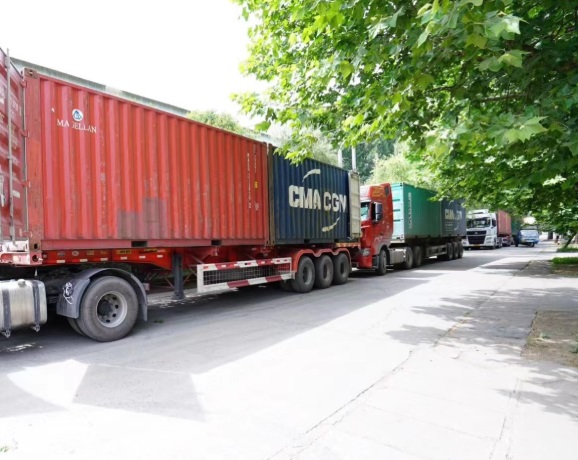
Lead time: Standard production: 15–25 working days after tooling and material availability. Complex geometries or special materials: 25–40 working days. We confirm exact lead time at order placement.
Warranty
We are responsible for 12 months from the time of delivery. If a part fails due to manufacturing defects like - Casting defect, machining error, wrong materials - we replace the part or give credit. Wear parts, broken impact part or modified ones from delivery? Not covered.
We give straight answers whether the warranty is applicable or not.
For making claims, you can send us images of the part, the part number, and the order number. After that we will respond within 48 hours.
If a production batch is faulty, we remould the batch keeping all the standards in the original work same, like drawing, material and tolerance.
If you have any questions? About materials, specifications, machining instructions, drawings, etc., we directly respond to you. Never a dead end.
About Yaojia Trading
Luoyang Yaojia Trading Co., Ltd. has over 20 years of practical experience in casting and metal component manufacturing. The company was established by Mr. Xi Xianmin, who has more than 25 years of experience in foundry production and engineering management.
Our manufacturing capabilities:
18,000m² manufacturing facility combining casting and machining
~68 employees
16-person R&D team with two senior engineers
Annual casting and machining capacity: 15,000 tons
Integrated capabilities:
Casting (gray iron, ductile iron, alloy cast irons)
Multi-axis CNC machining
Heat treatment
Surface treatment and coating
Inspection and CMM
Supply-chain coordination
Customers & markets:
Automotive OEM supply (BYD, Chery, Great Wall Motors — Tier 1 supplier)
Agricultural machinery
Industrial equipment
Products exported to South Korea, Japan, USA, Australia, Germany
Exhibition
In May 2024, Yaojia Trading exhibited at the China International Foundry Technology and Equipment Exhibition in Shanghai, showcasing casting accuracy and comprehensive industry-chain service capabilities.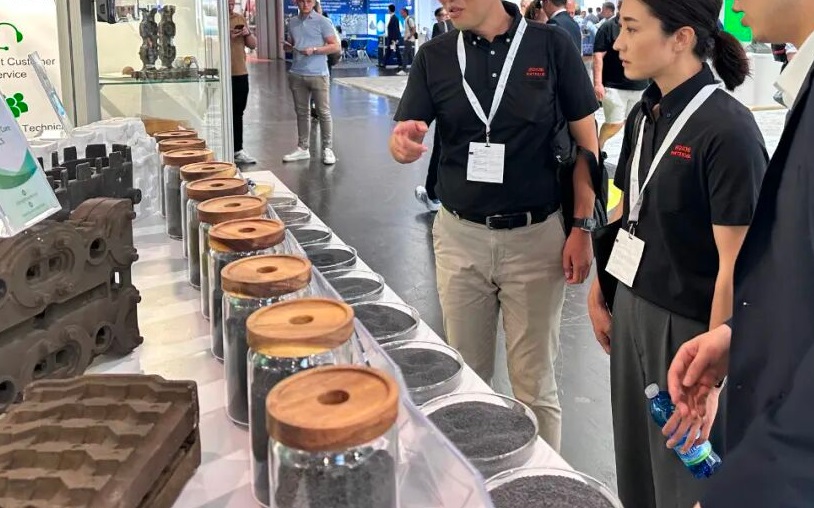
FAQ
Q1: What kinds of agricultural machinery parts can you produce?.
We create made-to-measure cast iron parts like gearboxes shells, supports for bearings, brackets to mount the machines, covers for pumps, structural elements, hitch parts, and other castings as per customers' needs.
Q2: Which cast iron grades are available?
Gray iron and ductile iron are the most often selected ones. Selection of the iron grade is based on the mechanical requirements of the part, wear characteristics, design of the part, and applicable standards.
Q3: Is it possible to make parts from our designs?
Of course. The clients are able to provide design drawings, CAD models, technical details, or show samples for evaluation.
Q4: Can you make a replacement part without a original drawing?
Detailed measurements of a physical object or the dimensions themselves can serve as materials for engineering assessment. The project outcome depends on the available data and the project scope.
Q5: Do you do machining after the cast item is completed?
Yes, that is, if the dimension of the component must be more strictly controlled or the mounting surfaces should be machined, we can organize machining and other post-casting operations.
Q6: Can you manufacture a few samples or even smaller quantity?
Absolutely. There are the possibilities of prototype samples, small quantity products and validation quantities. These are matters to be clarified before the regular supply of your project commences.
Q7:What inspection can be provided?
We can conduct, at the bare minimum, visual examination and checking measurements. Other tests and the analysis of the material as well as of hardness (hardness testing) can also be done per customer's demands. If you need, NDT is available along with other inspections.
Q8:What is it that needs you most to provide us a quotation?
An illustration sheet or a CAD file would probably be the best thing to start from. On the basis of the design, please indicate the iron grade, quantity, machining needs, surface treatment, type of inspection, and shipping destination. We will quote based on the available info.
Q9:What is your regular delivery interval?.
Production of standard castings: 15-25 working days Complex geometries and materials: 25-40 working days We specify precisely when the delivery will be after we get your order.
Q10:What is your minimum order?
For castings in large quantities, the minimum order is 50 units. We can discuss and find a way for prototype parts or a minimum quantity requirement if necessary.
Q11:What is your production output yearly?
15,000 tons per year is the total quantity for castings and CNC machining operations covered by casting and machining.
Q12:Is it possible to provide both OEM and other types of parts?
Yaojia is able to evaluate the possibility of producing parts for original equipment as well as replacement and other parts after the sale of the original ones. They can help their clients both with the production of their machines and the replacement parts.
Request a Quote
Send us your drawing, CAD model or existing part information together with the expected quantity and material requirements.
Our team can review the component and discuss a suitable casting and machining route for your agricultural machinery project.