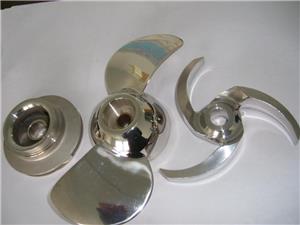
Multi-Axis Machined Exotic Metal Parts

- Yaojia
- china
- 25 days
- 3 million tons
Yaojia Trading delivers precision multi-axis machined components from advanced and exotic metals, engineered to perform under extreme thermal, corrosive, and mechanical conditions.
Multi-Axis Machined Exotic Metal Parts – Precision for Demanding Applications
One problem we hear from engineers and procurement teams
We have the right material; we have the right design;
But when the parts arrive, they do not fit. Or the surface finish is wrong. Or the threads are damaged.
Even the material cost alone is higher than we thought.
This is typical from engineers, procurement managers, and quality teams in the aerospace, energy, medical, and semiconductor industries.
Exotic metals -- titanium, Inconel, Monel, Hastelloy, tantalum - have superior mechanical characteristics. But the fact is, they do not behave like standard steel or aluminum, when you are cutting them.
Very high machining forces. The heat remains close to the cutting edge.
Some alloys work-harden very fast.
Others get damaged by vibrations or are sensitive to the pressure of the cutting tool.
A part that is easy on paper can still be a nightmare in production.
For the buyers, the main issue is not the machining cost only.
Variations in dimensions between different batches, threads damage and surface finish problems, unexpected distortions after removing the material-- all these can mean an increase of checks and rework, delaying the assembly, and even scrapping the products.
Yaojia method:
The first step was an engineering review- we did not start machining until we made sure that there will not be changes or rework on the product later. We look at all these: material properties, part geometry, tolerances, machining sequence, workholding, and inspection requirements. Our objective is simple: ensure that the production process is repeatable before we start using expensive materials.
Our expertise, not just machining service, goes to the design of manufacturing processes for exotic materials.
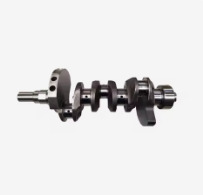
Materials we machine
Not all exotic metals can be classified together. Each alloy has different properties, so removing a part of it can change the outcome. Yaojia Trading machines a wide range of exotic metals, among them:
Titanium alloys (Ti-6Al-4V, Ti-6Al-4V ELI, CP-Ti)
Inconel and nickel-based superalloys (Inconel 718, Inconel 625, Haynes 282)
Monel alloys
Hastelloy alloys
Cobalt-chromium alloys (CoCrMo)
Specialty stainless steels
Tantalum, Zirconium, Molybdenum
Tungsten-based materials
Other customer-specified engineering alloys
Depending on the project requirements we can supply certificates and material traceability documents.
Technical specifications
| Parameter | Specification |
|---|---|
| Typical materials | Titanium, Inconel, Monel, Hastelloy, nickel alloys, specialty stainless steels, tantalum, and other exotic metals |
| Representative grades | Ti-6Al-4V, Ti-6Al-4V ELI, CP-Ti, Inconel 718, Inconel 625, Haynes 282, CoCrMo, and customer-specified grades |
| Machining capability | 3-axis, 4-axis, and 5-axis CNC milling; mill-turn and CNC turning |
| Maximum part size | Up to 800 × 600 × 400 mm, depending on geometry and machining requirements |
| Typical dimensional tolerance | ±0.005–0.02 mm; tighter tolerances evaluated per feature |
| Surface finish | Typically Ra 0.4–1.6 μm after machining; finer finishes available |
| Machined features | Complex contours, deep holes, threads, slots, cavities, curved surfaces, precision mating features |
| Secondary processing | Heat treatment, stress relieving, HIP, EDM, laser processing, coating, passivation |
| Inspection | CMM, dimensional inspection, surface roughness measurement, material certification, customer-specified checks |
Why exotic metals need more than a standard CNC machine
It is not only the machine which defines the result. With challenging materials, you heavily depend on a well-structured job plan.
The cutting conditions, tools, coolant supply, jig, machining stages, removal of material, etc., all play into the final dimension of the item.
Titanium cuts with much heat production at the tool-chip interface thus demanding an efficient regulation system whereas nickel alloys are quite challenging for the tools.
Such materials can even get a harder texture when working conditions are not properly maintained. That is exactly why we analyze the part even before a single line of code is written.
Checking the part after receiving it at the Engineering department:
Material grade and material condition
Critical dimensions and tolerances
Datum structure and machining allowances
Thin-wall areas or deep-pocket features
Depth of holes and availability
Thread specifications
Workholding and fixture access
Tool approach angles
Governing machining sequence
Requirement of heat treatment
Inspection points
We are not complicating the drawing but highlighting potential issues that we foresee.
Multi-axis machining for complex geometries
In the production of some parts, exotic materials simply cannot be utilized on a simple three-axis setup to get good results. Five-axis machining, however, allows the cutting head to take more strategic positions in order for feature cutting to be done in optimal directions with one less setup and better relationships being maintained between various machined surfaces.
Features you can expect:
Oblique and irregularly shaped holes, as well as complicated 3D surface designs
Round-shaped conduits and smoothly varying surfaces
Deep holes and multiple intersecting features
Mounting bases made to high degree of precision
Units for which a great number of datums are to be considered
Fewer setups are one of the factors that may be even more essential than a good individual deviation. Each additional setup introduces a whole new possible deviation due to location shifts.
Typical use cases
High-temperature resistant parts and aerospace
A specialty alloys will be used when the conventional materials can't offer the necessary combination of temperature resistance, strength, corrosion resistance, weight, etc.
Examples of parts that are used: turbine parts, combustion-system parts, structural fitting parts, engine parts, housing parts, high-temperature mounting parts.
Energy, power and high-temperature equipment
High-precision parts made of exotic metals are used in equipment that is exposed to heat, pressure, corrosive media, or demanding operating cycles.
Sample parts: valve parts, parts of pumps, parts for heaters, high-temperature fittings, parts of measuring instruments.
Semiconductor and vacuum equipment
Components are manufactured very clean, with accurately machined surfaces and interfaces that are kept under control.
Component examples: components related to vacuum chambers, components for ultra-high-vacuum, wafer-handling components, brackets for precision instruments, flanges and fittings for high performance.
Biomedical and precision equipment fields
Parts that need strength, corrosion resistance, biocompatibility, and dimensional stability.
Examples of products made: device parts, surgical tool parts, alignment parts, parts for machine casing, special mechanical parts.
What we eliminate pre-production
Reject parts in the exotic-metal field are expensive since the raw materials account for a large part of the total cost.
Typical issues that we correct:
Raw material wastage
Tool-induced machining errors
Inaccuracy and changes in the size of the finished part
After-cutting the part changes in shape
Surface finish that is not good
Abraded and broken threads
Parts that fail initial checks
Too many parts needing rework
Batch-to-batch variation
Shortages or missing materials, inspection documents
A good machining process has its origin even before the machine is switched on. We look for the aspects that will most likely cause problems and then we develop the production method around them.
Quality control — our 5-step inspection process
For exotic metal components, quality control is not a final check. It is built into every stage of production. With expensive raw materials and tight tolerances, we follow a structured inspection process that catches issues early — before they become costly scrap.
| Step | Inspection stage | What we check | Inspection method | Control standard |
|---|---|---|---|---|
| 1 | Incoming material verification | Material grade, dimensions, surface condition | Spectrometer analysis, micrometer, calipers | 100% material traceability; dimensions within drawing tolerance |
| 2 | First-article inspection (FAI) | Full dimensional check on first machined part | CMM, thread gauges, surface roughness tester | All features within ±0.005–0.02mm; Ra ≤1.6μm |
| 3 | In-process inspection | Critical dimensions, tool wear monitoring | Sampling inspection, tool condition monitoring | Key features checked every 10–20 parts; tool changes scheduled before deviation occurs |
| 4 | Final dimensional inspection | Full dimension check on finished parts | CMM, profilometer, hardness tester | 100% of critical dimensions verified; tolerance per drawing |
| 5 | Final visual & documentation review | Surface finish, thread quality, packaging condition | Visual inspection (10× magnifier), thread/plug gauges | Zero visible defects; all documentation complete |
Key inspection equipment:
CMM (Coordinate Measuring Machine) — dimensional accuracy to ±0.002mm
Roughness tester — surface finish Ra 0.4–1.6μm
Hardness tester — material property verification
Spectrometer — material grade confirmation
Thread gauges (go/no-go) — thread quality verification
Optical comparator — contour and profile measurement
What we deliver with every order:
Material certificates (if required)
Dimensional inspection reports
CMM measurement data
Surface roughness measurement results
Full traceability records
Customer-specific documentation as required
From prototype to repeat production
Many exotic-metal projects begin with only a few components. First parts may be needed for dimensional verification, assembly testing, material evaluation, or customer approval. Once validated, the order may move into regular production.
Yaojia supports:
Prototype machining
Engineering samples
First-article production
Validation builds
Low-volume and small-batch manufacturing
Repeat production
This allows the machining process to develop with the product — rather than forcing a development project directly into mass production.
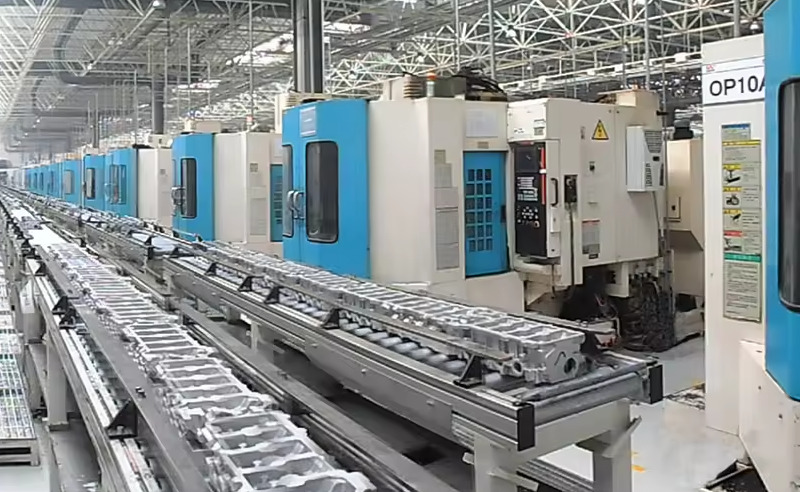
Inspection and Traceability
For costly components, inspection plays not just the role of verifying product characteristics after production but also checking the characteristics from start to the end.
Depending on the circumstances, inspection could involve
Verification of materials upon arrival to the factory
Inspection of dimensions and CMM measurements
Checking of threads and holes
Checking surface roughness
Eye inspection
Checking material certificates and heat-treatment documentation
Non-destructive testing (as the customer's drawings may request)
Batch and production traceability
The inspection plan is based on the drawing, material, application, and customer quality specifications.
Measurements for some essential features can be taken and reported along with the delivery of the goods.
Ordering and delivery
To get a quote, send us:
Drawing or 3D model
Material specification and grade
Quantity required
Tolerance and surface finish requirements
Inspection or certification requirements
Delivery schedule expectations
MOQ: 50 pieces per order (smaller quantities considered for prototypes — please inquire)
Payment terms: 30% deposit to confirm order; balance after inspection video confirmation of final product.
Shipping: FCL or LCL available. Rust-proof packaging, heavy-duty crates. We handle shipping and tracking to your doorstep.
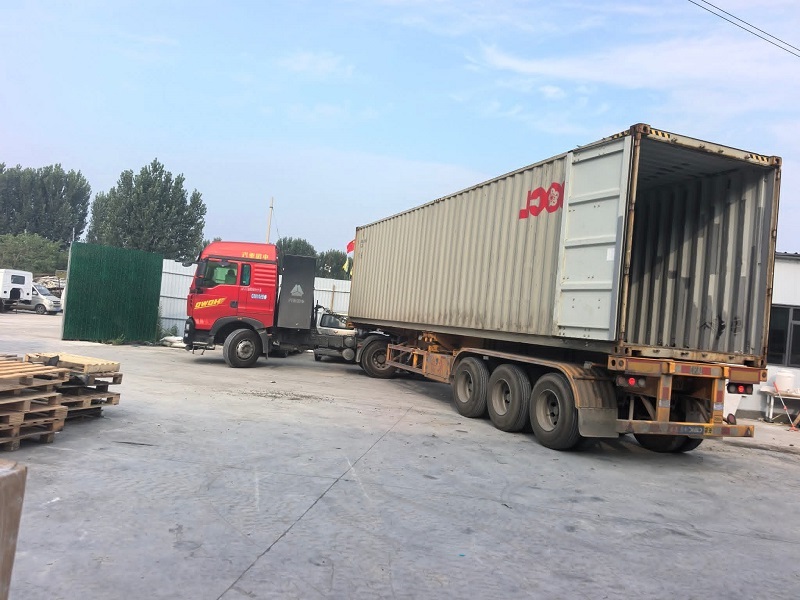
Lead time: Standard production: 15–25 working days after material availability. Complex geometries or special materials: 25–40 working days. We confirm exact lead time at order placement based on material availability and part complexity.
Warranty
We are responsible for 12 months from the time of delivery. If a part fails due to manufacturing defects like - Casting defect, machining error, wrong materials - we replace the part or give credit. Wear parts, broken impact part or modified ones from delivery? Not covered.
We give straight answers whether the warranty is applicable or not.
For making claims, you can send us images of the part, the part number, and the order number. After that we will respond within 48 hours.
If a production batch is faulty, we remould the batch keeping all the standards in the original work same, like drawing, material and tolerance.
If you have any questions? About materials, specifications, machining instructions, drawings, etc., we directly respond to you. Never a dead end.
About Yaojia Trading
Yaojia Trading has over 20 years of practical experience in casting and metal component manufacturing. The company was established by Mr. Xi Xianmin, who has more than 25 years of experience in foundry production and engineering management.
Our manufacturing base:
18,000m² facility combining casting and machining capabilities
~68 employees, including a 16-person R&D team with two senior engineers
Annual casting and machining capacity:15,000 tons
Although casting remains an important part of our background, our production services also cover CNC machining, inspection, finishing, and supply-chain coordination for custom metal components.
Yaojia Trading has supplied components to automotive, agricultural machinery, industrial equipment, marine, and other engineering sectors. We have experience supporting supply chains associated with BYD, Chery, and Great Wall Motors, where quality documentation, communication, and delivery coordination are essential.
Our products are supplied to customers in South Korea, Japan, the USA, Australia, and Germany.
Integrated manufacturing capabilities:
Casting (foundry)
Multi-axis CNC machining
Heat treatment
Finishing and coating
Inspection and CMM
Supply-chain coordination
Certifications and quality
| Item | Status |
|---|---|
| Material certification | Available per project |
| Inspection reports | CMM data, dimensional reports, surface finish measurement |
| Traceability | Batch and production records maintained |
| Quality system | Established processes for first-article and repeat production |
Exhibition
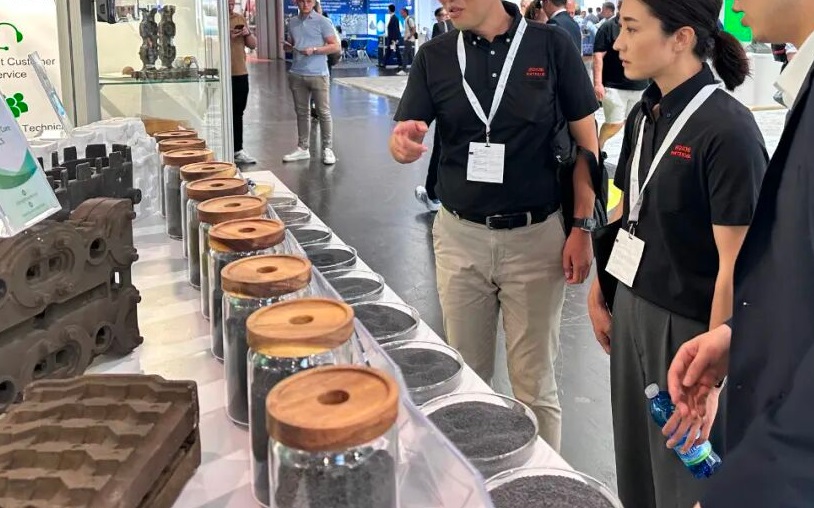
In May 2024, Yaojia Trading exhibited at the China International Foundry Technology and Equipment Exhibition in Shanghai, showcasing casting accuracy and comprehensive industry-chain service capabilities.
FAQ
Q1: Can you manufacture from customer drawings?
We can. Normally, the starting point is customer drawings, 3D models, or samples.
Q2: Do you support prototype quantities?
In our offering prototypes, parts used for qualifications and small-scale parts for developments are all covered under what we commonly refer to with no particular order.
Q3: Can inspection reports be supplied?
We can indeed supply inspection reports along with material certificates, measurements reports, CMM data and any other documents that you may need.
Q4: What information is needed for a quotation?
It is customary to ask for the drawing first, followed by description of the material, quantity, tolerance levels and surface finish requirements which would be needed.
Also to be mentioned in case there are specifications for inspection and certification, the customer is usually asked to supply these details as well.
Together with above information they should be enough to go ahead with a first review of the project.
Q5: Can you support repeat orders?
Definitely. We will continue producing components and their processes once they have been tested to be correct in all aspects, in line with our agreements about the delivery schedule and customer's requirement for materials.
Q6: What exotic metals do you machine?
Titanium alloys, Inconel, Monel, Hastelloy, cobalt-chromium alloys, tantalum, zirconium, molybdenum, materials with tungsten matrix and various customer requested high-tech engineering alloys are our capabilities in machining of the materials you mentioned.
Q7: What is your typical lead time?
The time to get a product or service done would be quoted per individual product, depending upon the materials, design, and number of items.
Q8: What is your MOQ?
If production is a normal one then 50 pieces would be our minimum order quantity (MOQ).
Nonetheless, if we can be a bit more flexible on the MOQ and there happens a situation you want a small quantity or it was a prototype, it is possible to talk about that.
Q9: Do you provide material certification?
All in good time. On your projects, we will provide you not only with material certificates but other related documents that can prove the traceability of products.
Q10: What industries do you serve?
We work with such sectors as aerospace, energy, semiconductor, medical, automotive, industrial equipment, and marine.
Four questions to ask any exotic metal machining supplier
What is your approach to work hardening in nickel-based alloys?
How do you control distortion in thin-walled titanium parts?
What inspection equipment do you use for critical dimensions?
Do you have experience with my specific material grade?
We have answers ready. Ask us.