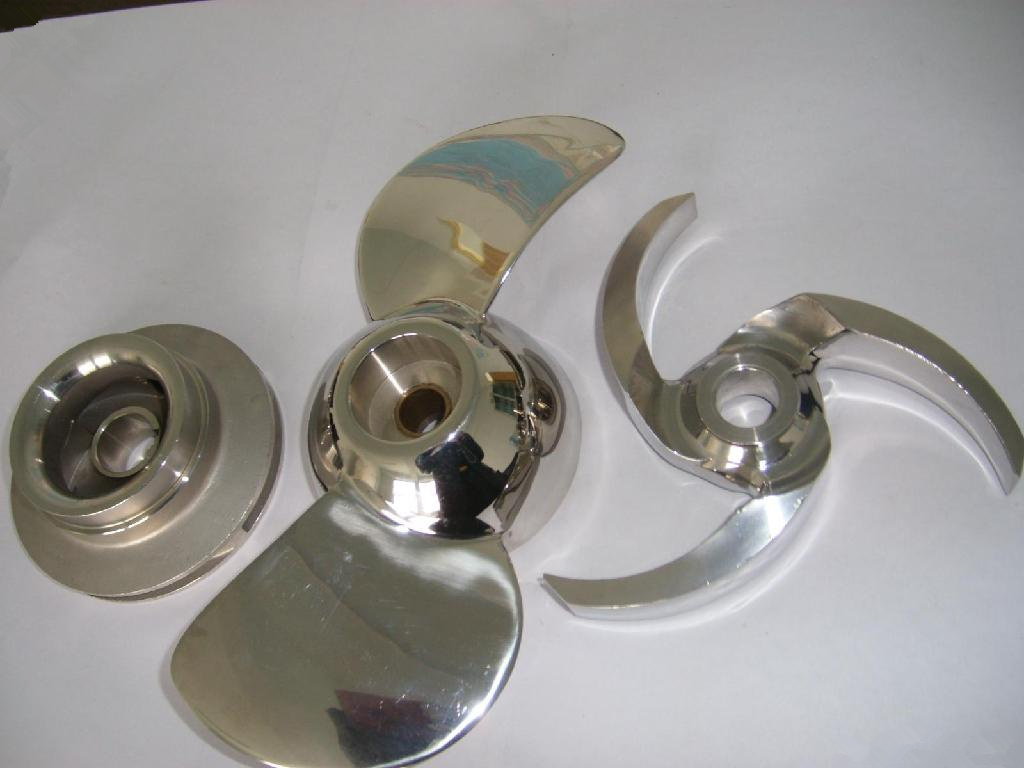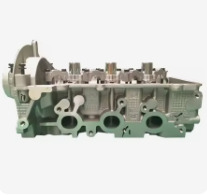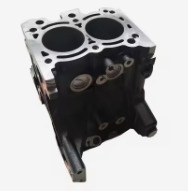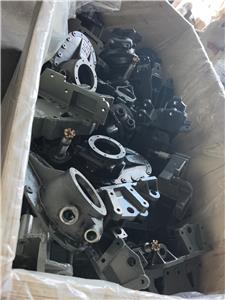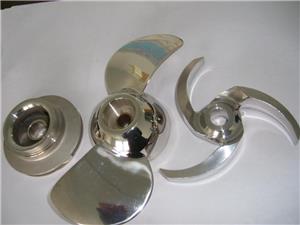
Aluminum Castings With CNC Milling Services

- Yaojia
- china
- 25 days
- 3 Million Tons
Yaojia Trading provides a complete manufacturing solution that combines high-quality aluminum castings with precision CNC milling services.
Aluminum Castings with CNC Milling – Cast, Machine, and Assemble with Confidence
One problem we hear from engineers and procurement teams
The casting looked good. The hole pattern was a little out of place. A sealing surface did not seat flush against the mating part. A bearing groove was within its individual tolerance but not correctly related to the other datumequilibrium.
We constantly get similar complains from engineers, quality assurance, and purchasing teams in the automotive, equipment and machine industry sectors. A casting of aluminum alloy for example may have been produced looking just according to its drawing.
The machining supplier will then work the bores, mounting surfaces, bearing grooves, threads or other important features of the part. Each job may clear its separate inspection test.
The problem arises only at final assembly stage of the part.
Usually, the root of issue isn’t casting or machining processes were done wrongly. More likely, the casting and the machining processes were not coordinated at planning stage.
Yaojia Methodology:
In case we need to machine aluminum parts quite extensively, before we start production, we examine in details the casting shape, dimension of the machining allowance, datum surfaces, important measurements, and assembly features, together. Our target is simple: the casting should allow the machining of the part, the machining must make the part suitable for its final assembly.
A single casting component only. A part is first made through casting and then the machined part of the component becomes a final assembly-ready unit.
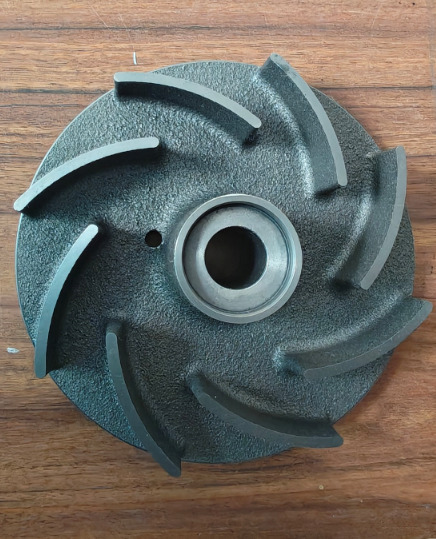
Technical specifications
| Parameter | Specification |
|---|---|
| Aluminum casting alloys | A356, A360, A380, and other customer-specified alloys |
| Machined aluminum options | 6061, 6082, 7075, and other grades subject to project review |
| Casting processes | Sand casting, die casting, investment casting, permanent mold casting |
| CNC machining | 3-axis, 4-axis, and 5-axis CNC milling; multi-operation machining |
| Machining envelope | Up to 1000 × 800 × 500 mm, depending on part geometry |
| Casting tolerance | Typically ISO 8062 grades according to casting process and design |
| Machined tolerance | Typically ±0.02–0.10 mm; tighter tolerances reviewed by feature |
| Surface finish | As-cast and machined finishes according to drawing requirements |
| Machined features | Holes, threads, slots, pockets, flat faces, contours, and 3D surfaces |
| Secondary operations | Drilling, tapping, boring, counterboring, deburring, anodizing, painting, and other finishing processes |
| Inspection | Dimensional inspection, CMM measurement, and customer-specific inspection plans |
Actual material grades, tolerances, and machining limits are confirmed against the part drawing and application requirements.
Where It Is Good to Get CNC Machined Aluminum Castings
Pump and valve bodies will also need sealing surfaces, threaded ports, mounting holes, valve seats, and valve connection faces done with a high degree of precision. Gearbox and transmission housings will need bearing bores, cover mounting faces, bolt-hole patterns, shaft openings, locating surfaces, and internal pockets to be machined.
Hydraulic manifolds require drilled passages, threaded ports, mounting holes, sealing surfaces — the inter-relations between elements may be of more importance here than just a good surface finish. Automotive industry parts need multiple mounting faces, holes that are located with a high degree of precision, screw-threaded connectors, reference surfaces that are machined, complex pocket and contour areas.
Marine and heavy equipment parts: weight reduction, excellent surface finish after machining, corrosion protection — which alloy and which process to choose really depends on what the part will be doing.
Quality control - we have a 5 step inspection process
Quality control of aluminum castings after machining is incorporated into each stage of production. Our inspection is methodical and we make sure that each part meets the drawing specifications before it is dispatched.
| Step | Inspection stage | What we check | Method | Control standard |
|---|---|---|---|---|
| 1 | Incoming material verification | Material grade, dimensions | Spectrometer, micrometer | 100% traceability; dimensions within tolerance |
| 2 | First-article inspection | Full dimensional check on first cast/machined part | CMM, thread gauges, hardness tester | All features per drawing |
| 3 | In-process inspection | Critical dimensions, casting quality | Sampling, visual inspection | Key features checked per control plan |
| 4 | Final dimensional inspection | Full dimension check on finished part | CMM, profilometer, hardness tester | 100% critical dimensions verified |
| 5 | Final visual & documentation review | Surface finish, coating, packaging | Visual inspection | Zero defects; all documentation complete |
Key inspection equipment: CMM, hardness tester, spectrometer, thread gauges, visual inspection stations
What we deliver: Material certificates, dimensional reports, CMM data, hardness test results, full traceability, customer-specific documentation
Together is the only way to go for casting and machining.
It is very easy to finish a casting design and afterwards start planning for the machining. Such an approach is fine only for very simple parts. It, however, gets complicated when a part has many critical machining features.
Prior to tooling, our engineering team analyzes:
Where machining allowances have to be made
Which surfaces would be machining datum
If casting wall thickness is enough
The way that the part would be fixtured
Which features require tolerance limitation
If cutting tools can be inserted into the required areas
What dimensions are important for finishing the assembly
Which machining is unnecessary
The right way is to figure out the dimensions that will actually affect the function and the assembly of the component, then regulate those features accordingly.
Coping With Production After Prototypes
A lot of machining works just start with a small amount of the parts. The first parts of a new component may be only a few pieces meant for design verification, assembly testing, functional evaluation, customer approval, or process validation.
Yaojia can supply:
Prototype castings
Machined parts samples
Engineering validation parts
Pilot batches
Small volume production lines
Repeating production orders
Placing orders and deliveries
In order to be able to offer you a quote, please e-mail us the following:
Drawings (2D), 3D CAD model, or the actual part
Type of materials and grade
Desired quantity
Machining and surface treatment details
Inspection or certificate requirements
Desired delivery schedule
Minimum Order Quantity: If we talk about conventional casting and machining production, we start with a minimum of 50 parts. The quantities of prototypes, small orders can be negotiated.
Payment: Initially 30% deposit is expected and the balance after confirmation of the delivery and quality in person by video conference via T/T.
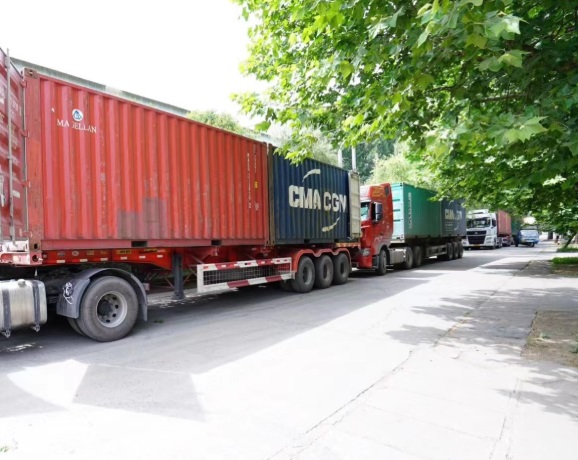
Shipping: Containerized shipping, LCL also possible. Packaging - protective and reinforced wooden crates.
Production time: Conventional parts - 15-25 calendar days, complex shapes or special materials - 25-40 calendar days. Exact production time is communicated after placing order.
Warranty
We are responsible for 12 months from the time of delivery. If a part fails due to manufacturing defects like - Casting defect, machining error, wrong materials - we replace the part or give credit. Wear parts, broken impact part or modified ones from delivery? Not covered.
We give straight answers whether the warranty is applicable or not.
For making claims, you can send us images of the part, the part number, and the order number. After that we will respond within 48 hours.
If a production batch is faulty, we remould the batch keeping all the standards in the original work same, like drawing, material and tolerance.
If you have any questions? About materials, specifications, machining instructions, drawings, etc., we directly respond to you. Never a dead end.
About Yaojia Trading
Luoyang Yaojia Trading Co., Ltd. has over 20 years of practical experience in casting and metal component manufacturing. The company was founded by Mr. Xi Xianmin, who has more than 25 years of experience in foundry production and engineering management.
Our capabilities:
18,000m² modern production base
~68 employees
16-person R&D team with two senior engineers
Annual casting and machining capacity: 15,000 tons
IATF 16949 quality management certification
Integrated services:
Casting (sand casting, die casting, investment casting, permanent mold casting)
Multi-axis CNC machining (3-axis to 5-axis)
Heat treatment
Surface treatment and coating (anodizing, painting)
Inspection and CMM
Supply-chain coordination
Customers & markets:
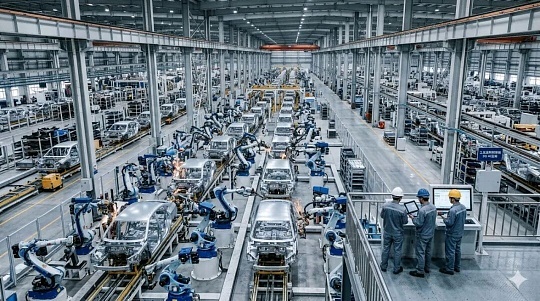
Tier 1 supplier to BYD, Chery, Great Wall Motors
Automotive OEM supply
Industrial equipment, marine, heavy equipment
Products exported to South Korea, Japan, USA, Australia, Germany
Exhibition
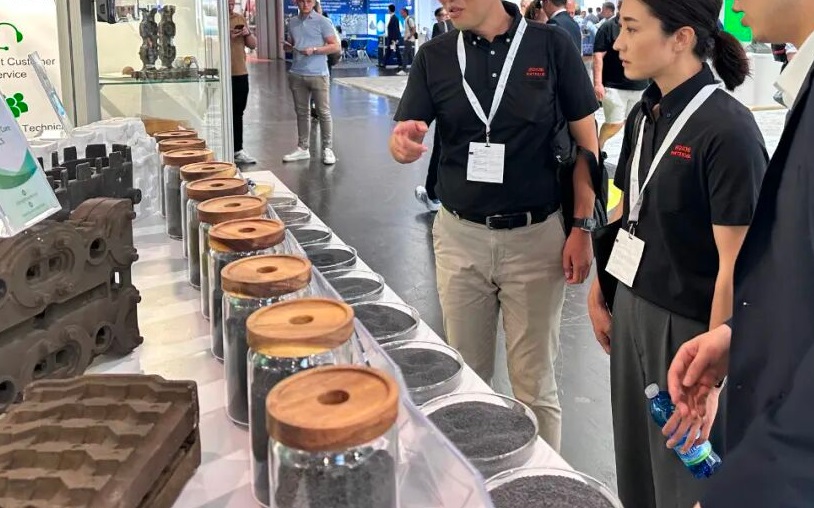
In May 2024, Yaojia Trading exhibited at the China International Foundry Technology and Equipment Exhibition in Shanghai, showcasing casting accuracy and comprehensive industry-chain service capabilities.
FAQ
Q1: Would it be possible to receive fully machined aluminum castings from you?
Of course. We are able to cast the part and then do the machining on it so that the final part will be fully machined as it is delivered to you.
Q2: Can you take over and complete the product based on a customer's drawing?
Our team is happy to help you out as long as you provide a drawing, a CAD model, or the part itself for reference. All these can be the basis for a project quotation.
Q3: Do you machine all surfaces of aluminum castings?
No, there really is no practical reason to do machining of surfaces that do not affect the function or assembly of the part. Through detailed engineering review we can point out the features that actually require dimensional or finish control.
Q4: Is it possible to have prototypes made before large-scale production?
Absolutely. Before production runs are made, you can talk with us about sample parts that can later be used for validation or even as the first batch for your production line.
Q5: Which CNC machining operations do you offer?
Our machining services include milling, drilling, tapping, boring, counterboring, pocketing, contouring as well as several other necessary CNC machining operations.
Q6: How do you assure that the dimensional features are accurate?
Selection of inspection techniques is dependent on the feature and/or requirement of the customer – the conventional measurement, CMM inspection, and final inspection with documentation are among the inspection methods.
Q7: Can surface treatment be done after machining?
Definitely. In accordance with the type of aluminum alloy, the usage, and the customer specification, we can think of anodising, painting, and other types of finishing as surface treatments.
Q8: Please advise factors that may impact the lead time?
These are tooling, process of casting, complexity of the part, machining needs, scope of inspection, finishing work, and quantity of the order.
Q9: If I want to get a quotation, what do I need to send you?
A 2D drawing or 3D CAD model, type of material, estimated number of pieces, critical dimensions, surface finish, the way of the inspection, and special processing, if needed.
Q10: How long do you usually take to deliver?
Normal time: 15–25 workdays. Complex time: 25–40 workdays. At time of ordering we will fix a confirmed delivery time.
Q11: What is your minimum order quantity requirement?
We usually ask for a minimum order of 50 pieces. However, we are also flexible on quantities for prototypes and small orders.
Q12: How much can you produce in a year?
15,000 tons annually from casting and CNC machining.
Q13: Please tell us, which certifications do you have?
IATF 16949.
We serve as a Tier 1 supplier to some of the biggest car manufacturers such as BYDMotor, Chery, and Great Wall Motor.
Four questions to ask any aluminum casting + machining supplier
Do you plan the casting and machining processes together — or separately?
What aluminum alloys do you work with for castings and for machined parts?
How do you ensure critical dimensional relationships between machined features?
Do you have experience with similar components in my industry?
We have answers ready. Ask us.