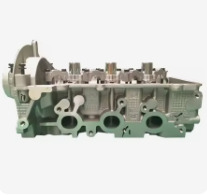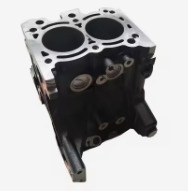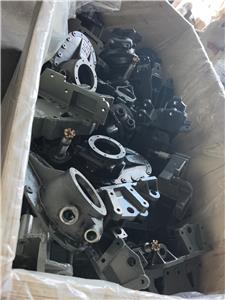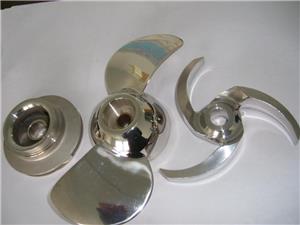
Luoyang Yaojia Trading Co., Ltd. Strengthens Full-Process Quality Control and Assurance for Automotive Casting Exports
Quality Control Starts Long Before the Final Inspection
A casting does not suddenly become a quality product when it reaches the inspection table.
By then, quite a lot has already happened. The material has been melted and poured. The mold has done its job. The part may have gone through heat treatment and machining. A problem found at the end can sometimes be traced back several steps.
That is why Yaojia Trading has been putting more attention on inspection equipment and the way quality information is collected during production. For automotive and other precision castings, checking only the finished part is simply too late.
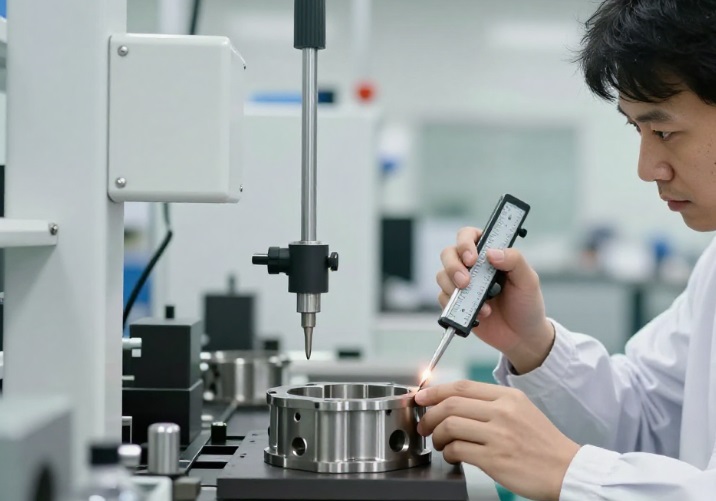
Looking at the Part as It Moves Through the Factory
A casting passes through several hands before it is ready for shipment.
Material inspection comes first. Then there is mold preparation, casting, heat treatment, machining, and final inspection. Each stage can leave something behind that affects the next one.
Yaojia operates under a TS16949 quality management system certification and keeps inspection records for production batches. When a dimensional problem or casting defect turns up, the records give the quality team something to work from. They can go back through the relevant production information instead of starting the investigation from the finished part alone.
This is also useful for overseas buyers. Quality documents supplied with an order give their receiving teams a clearer reference when the castings arrive.
A Good First Part Is Not Enough
Anyone involved in production knows that making one acceptable casting and making 5,000 of them consistently are two different things.
During Precision Casting Mass Production, small changes can become noticeable if they are allowed to continue. Pouring conditions may shift. A mold may wear. Heat treatment conditions may vary. A machining operation may gradually move away from the intended dimension.
For that reason, production personnel monitor important process conditions instead of waiting for final inspection to reveal a problem.
The objective is fairly simple: if something starts moving in the wrong direction, catch it while there is still time to do something about it.
The Drawing Comes Into the Discussion Early
Not every casting problem starts on the production floor.
Sometimes the issue can be seen in the drawing itself.
A particular wall section may be difficult to cast. A machining allowance may be too small. A feature may require more attention during mold development. These things are much easier to discuss before tooling is made.
Yaojia provides Drawing-Based Processing and Sample Customization for this reason. Engineers review customer drawings and discuss manufacturing details with the customer's technical team. During sample development, changes and comments are recorded so that the latest version of the requirement is not lost somewhere in an email conversation.
It is a small part of the process, but it can prevent a surprisingly common situation: the sample is made according to one instruction while the production team is working from another.
When One Problem Leads to Another
A useful thing about keeping related production stages connected is that engineers can look at the whole sequence.
Suppose a machined bore is out of tolerance. The first reaction may be to check the CNC operation. But the machining setup may not be the real cause. The forged or cast allowance, heat-treatment movement, or even the original locating surface could be involved.
With Complete Casting Industry Chain Services, mold making, casting, heat treatment, machining, and inspection can be coordinated through the same manufacturing system.
That does not make defects disappear. It does, however, make it easier to ask the right question when one appears.
Inspection Records Need to Be Useful
There is a difference between having a quality report and having a report that someone can actually use.
For an international buyer, inspection data may be reviewed by purchasing, engineering, quality, and incoming inspection teams. They may need to know what was measured, which standard was used, and whether the result was within the agreed requirement.
Yaojia's inspection personnel receive training in relevant testing procedures, including non-destructive testing methods used for casting inspection. Test results and inspection records provide a factual basis when customers have questions about a batch.
That is more useful than simply telling a buyer that the parts have gone through “strict quality inspection.”
Sample Orders and Production Orders Have Different Pressures
A prototype project can be demanding in a completely different way from a regular production order.
A new casting may need two or three sample rounds before the customer is satisfied. At the same time, another component may already be running on a regular production schedule.
Yaojia's 18,000-square-meter production base is used for both development work and larger-volume production. Trial work can be scheduled alongside ongoing orders without automatically treating every sample project as part of the normal production flow.
The company lists an annual production capacity of 30 million tons. This figure should be checked against the actual product scope and original company records before publication, as the number is unusually high for an automotive casting business.
What Happens When a Defect Keeps Coming Back?
Finding a defective part is only the first step.
If the same problem appears again, someone has to look beyond that individual casting.
Yaojia's 16-member R&D team works with production and quality personnel when recurring casting problems need to be investigated. The team can examine defect samples, review process conditions, and make adjustments where necessary.
This kind of work is not always visible to the customer. It happens in the background, often after a production issue has already been identified.
But over time, solving the cause rather than repeatedly sorting out the result can reduce scrap and make the process easier to control.
The Last Check Is Not the Last Risk
A casting can leave the inspection area in perfect condition and still be damaged before it reaches the customer.
Export shipments may spend weeks in transportation. Moisture, handling, stacking, and vibration can all affect the condition of the finished parts.
For overseas orders, Yaojia uses anti-rust treatment and reinforced packaging where the project requires them. Customers in markets such as South Korea, Japan, the United States, Australia, and Germany may also have their own packaging and documentation requirements.
The quality check therefore has to be considered together with the way the parts will be packed and shipped.
Quality Feedback Has to Come Back
Production does not end when the truck leaves the factory.
If a customer finds something during incoming inspection or assembly, that information needs to get back to the people who made the part. Otherwise, the same issue may appear again in the next batch.
Yaojia reviews customer feedback internally with the relevant production, quality, and engineering personnel. Depending on the issue, the discussion may lead to a change in an inspection point, a production parameter, or a process instruction.
This is where Full-Process Quality Control and Assurance becomes more than a phrase on a product page. The useful part is the connection between inspection results and what happens on the shop floor afterward.
For an overseas buyer, that connection is important. A supplier does not need to claim that every casting will be perfect. What matters is whether the supplier has a practical way to find problems, trace them, and prevent the same problem from quietly moving into the next production batch.