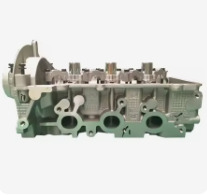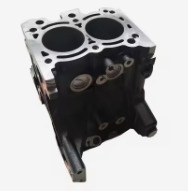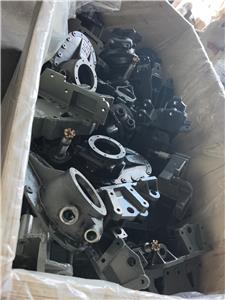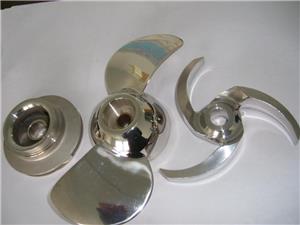
Luoyang Yaojia Trading Co., Ltd. R&D Team Drives Innovation in Precision Casting Mass Production Technology
Yaojia Trading Puts More Engineering Work Into Automotive Casting Development
In casting, a small change in a process can sometimes have a noticeable effect on the finished part. This is especially true for automotive components with thin sections, complicated shapes or demanding machining requirements.
At Luoyang Yaojia Trading Co., Ltd., technical improvement is handled by a 16-member R&D team supported by two senior engineers with extensive casting experience. Their work covers the practical problems that appear when a component moves from a customer's drawing into actual production.
The focus is not simply on introducing new equipment or technology. A process still has to work on the production floor, remain repeatable and make sense for the customer once the part enters regular supply.
Engineering Starts Before the First Casting Is Made
Some casting problems can be identified before a mold is completed. During drawing review and sample development, engineers can look at the way metal is expected to enter and fill a mold, as well as how the casting will solidify.
Where suitable simulation tools are available for a project, virtual analysis can provide another reference for reviewing gating, riser arrangements and areas that may require additional attention. This does not replace physical samples, but it can give engineers more information before committing to repeated tooling trials.
For customized automotive components, that early review can be useful because a design change made before tooling is finalized is usually easier to manage than a change made after production has started.
Different Materials Require Different Process Settings
Casting parameters cannot simply be copied from one material to another. Melting temperature, pouring conditions and cooling behavior can all influence the final result.
The R&D team works with production personnel to review these factors when developing casting processes for customer projects. Trial results provide a basis for deciding whether a particular process needs adjustment before a component moves into larger-scale production.
The work is often incremental. A change may involve one process parameter rather than a complete redesign, followed by another round of checks to see whether the result is actually better.
Turning Production Problems Into Engineering Work
Not every improvement begins in the R&D office. Some start with a problem noticed by a production worker or quality inspector.
When a recurring defect or process variation appears, technical personnel can examine the production conditions and look for a practical cause. The resulting adjustment may involve tooling, pouring conditions, cooling, machining or another part of the manufacturing route.
This connection between the workshop and the engineering team is important for mass production. A solution that works only under laboratory or trial conditions has little value if it cannot be reproduced during normal production.
New Processes Are Tested Before Wider Use
A new process is not normally introduced across an active production line without checking how it behaves first. Yaojia Trading can arrange trial production when a process change needs to be evaluated.
The purpose of a trial is fairly simple: determine whether the proposed method produces the expected result without creating new problems elsewhere. Production staff can also provide feedback about operating difficulty, cycle time and repeatability.
This practical feedback helps engineers judge whether an improvement is ready for broader application or still needs adjustment.
Working Across the Production Chain
Casting development does not end when the metal leaves the mold. Heat treatment and machining can affect the final component just as much as the casting stage itself.
Because Yaojia Trading's production setup covers mold development, casting, heat treatment and machining, engineers can consider these stages together when reviewing a component. This is particularly useful for parts where the casting geometry and later machining requirements are closely connected.
For a customer, the benefit is that technical discussions do not have to stop at the casting stage. A drawing can be reviewed with the finished manufacturing route in mind.
Experience Still Has a Place Beside Technology
Modern casting technology can provide better tools for analyzing and controlling production, but it does not remove the need for experienced people.
The two senior engineers at Yaojia Trading bring years of casting experience to the R&D team. Their role includes reviewing production problems, discussing possible process changes and helping less experienced engineers understand why a particular adjustment may or may not work.
This combination of accumulated shop-floor knowledge and newer technical methods is part of how the company approaches process improvement.
Keeping Technical Knowledge Up to Date
Casting technology continues to change, so technical development is not limited to projects already on the production schedule. The company's engineering personnel follow industry developments and take part in technical learning and professional exchanges where appropriate.
The purpose is practical rather than simply academic. New information is useful when it can be connected with an actual production problem, a new customer requirement or a better way of controlling a process.
For an export-oriented casting business, keeping engineers familiar with changing automotive requirements is also important when working with customers from different markets.
Protecting and Building on Process Experience
As a company's technical experience grows, documenting useful process improvements becomes increasingly important. Process records, trial results and engineering experience can provide a reference when similar components are developed later.
Yaojia Trading is also paying attention to the protection of technical achievements as its manufacturing capabilities develop. Where an innovation has sufficient technical and commercial value, the company can evaluate appropriate forms of intellectual property protection.
The emphasis remains on useful manufacturing know-how rather than treating every process adjustment as an innovation in its own right.
The Next Step in Casting Development
The development of new energy vehicles is likely to keep creating demand for casting solutions that balance weight, strength, manufacturability and cost. For casting suppliers, this means continuing to improve processes while remaining practical about what can be produced consistently.
Yaojia Trading plans to keep developing its technical team and manufacturing capabilities as new projects come in. The immediate value of this work will be seen in individual customer projects—better sample development, fewer avoidable production problems and a smoother transition from prototype to repeat production.
For the R&D team, that is ultimately what technical improvement comes down to: finding a better way to make the next part than the last one.