Global Automotive Lightweight Trend Accelerates Demand for Precision Casting Mass Production
The automotive industry is still looking for practical ways to take weight out of vehicles, particularly as electric vehicles become more competitive in Asia, Europe, and North America. For automakers such as Chery, BYD, and Great Wall Motors, the challenge is not simply making a part lighter. The part still has to hold its strength, fit the assembly correctly, and remain consistent when thousands of pieces are produced.
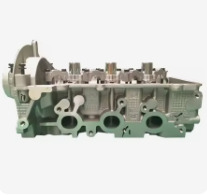
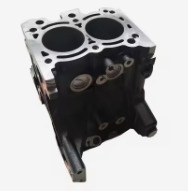
That is where Precision Casting Mass Production becomes useful. Complex metal components can be difficult to manufacture economically when every batch requires a different approach. Luoyang Yaojia Trading Co., Ltd. works with automotive supply chains to follow changes in component drawings and production requirements, particularly for EV chassis and powertrain applications.
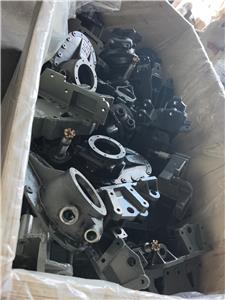
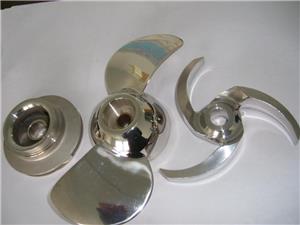
Precision Casting Mass Production
One Production Chain Instead of Several Separate Suppliers
For a buyer, the casting itself is only part of the job. Problems often start when the tooling is handled by one workshop, casting by another, heat treatment somewhere else, and machining by a fourth supplier. A delay at any point can affect the whole order.
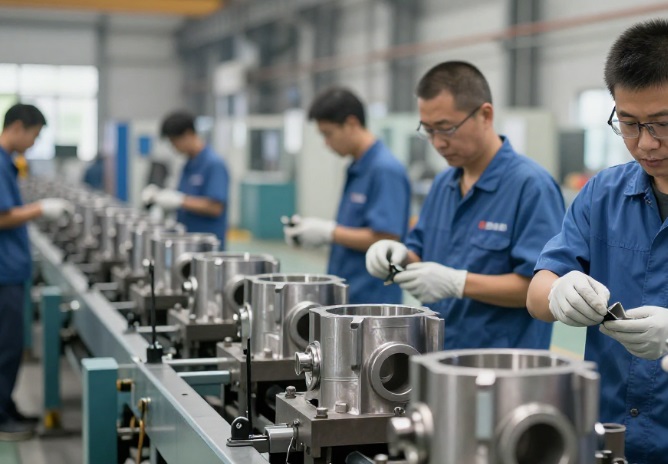
This is why Complete Casting Industry Chain Services can make a difference in volume production. At Luoyang Yaojia Trading Co., Ltd., raw material inspection, mold development, casting, heat treatment, and final machining are coordinated through the company's 18,000-square-meter production base. Buyers have fewer separate production links to manage, and technical issues can be discussed with the same team instead of being passed from one subcontractor to another.
For larger automotive orders, this arrangement also makes production planning easier. If a problem appears during machining, for example, the information can be traced back to the earlier casting or heat-treatment stage rather than being treated as an isolated machining issue.
Samples Are Often Where a Project Really Starts
Before an automotive component enters mass production, engineers need to know whether the design works in an actual part—not just on a drawing.
Drawing-Based Processing and Sample Customization is therefore an important part of the development process. Yaojia's engineering team reviews customer drawings, checks whether the proposed structure is suitable for casting, and discusses possible changes when a feature could create problems during production. Trial castings can then be made for dimensional and functional evaluation.
This step can save considerable trouble later. A small change to a wall thickness, fillet, machining allowance, or casting structure is much easier to deal with during sampling than after production tooling and a large batch have already been committed.
Samples are also checked against the customer's assembly requirements. Engineers with long-term casting experience pay particular attention to the details that can affect how the finished component fits and works on the vehicle production line.
Quality Has to Be Controlled Along the Way
Automotive buyers generally do not judge a casting only by its final appearance. They need confidence that the same requirements will be followed from the first batch to the next one.
Yaojia uses Full-Process Quality Control and Assurance covering incoming material inspection, production-stage checks, non-destructive testing where required, and final inspection before shipment. The company operates under a TS16949 quality management system certification for automotive-related production.
The purpose is straightforward: identify problems while they are still manageable. Catching a casting defect during production is very different from discovering it after machining, assembly, or delivery to the customer.
Production Capacity Matters When Volumes Change
A supplier may produce good samples and still struggle when the order volume increases. Automotive programs can move from small trial quantities to regular high-volume production, and the supplier needs enough production resources to handle that change.
Yaojia's manufacturing base has a stated annual production capacity of 30 million tons. Its 16-member R&D team works on casting process improvements, material utilization, and defect reduction. These activities are not limited to new projects; existing processes are also reviewed when production data shows room for improvement.
For buyers, the practical benefit is greater production flexibility when order volumes rise during a busy period.
Supporting Overseas Automotive Buyers
Automotive casting projects are not limited to the domestic market. Buyers in South Korea, Japan, the United States, Australia, Germany, and other industrial markets often look for suppliers that can handle more than the casting operation itself.
This is another reason Complete Casting Industry Chain Services can be useful. Instead of coordinating several independent workshops in China, an overseas buyer can work through one production partner for the major stages of the casting process.
Yaojia supplies finished castings to international customers and follows up on quality feedback after delivery. For long-distance cooperation, that communication is important. When a dimensional issue or application-related question comes up, the supplier needs to understand what happened to the part rather than simply respond to a shipment number.
Sample Development Without a Factory Visit
For a new overseas customer, the first order often involves a certain amount of uncertainty. The buyer may have a new drawing, but has not yet worked with the supplier and cannot easily visit the factory.
Drawing-Based Processing and Sample Customization provides a practical way to start the relationship. Customers can send drawings and technical requirements for review, then evaluate samples before moving to larger quantities. Yaojia also provides sample inspection information and production videos to give overseas buyers a clearer view of how the project is being handled.
It does not replace an on-site audit, but it can make the first stage of cooperation much easier to manage.
Reducing Waste Through Better Process Control
Sustainability is becoming another consideration in automotive sourcing. For casting suppliers, part of the work starts with reducing unnecessary scrap.
Better control of melting, molding, machining allowances, and inspection can reduce the number of parts that have to be remade. That means less wasted metal, less processing time, and less energy used on parts that will never reach the customer.
Yaojia continues to adjust its melting and molding processes with this in mind. For automotive projects where material efficiency and production stability are both under review, these process improvements can become relevant during supplier evaluation.
Experience Still Matters in Difficult Castings
Modern equipment is important, but casting knowledge is difficult to replace with equipment alone. Complex alloys, unusual geometries, thin sections, and non-standard component structures can all create problems that are not obvious from a basic production drawing.
Yaojia has 68 employees, including two senior engineers with extensive experience in the casting industry. The company was founded by Mr. Xi Xianmin, who has 25 years of experience in casting.
That accumulated experience is particularly useful when a new component does not behave exactly as expected during trial production. Instead of relying only on standard parameters, the engineering team can go back to the casting process itself and look for the reason behind the problem.
Built for Long-Term Automotive Programs
Automotive sourcing rarely ends with one successful sample. Once a component enters regular production, the supplier has to keep the process stable while still responding to drawing changes, volume fluctuations, and quality requirements.
For Luoyang Yaojia Trading Co., Ltd., Complete Casting Industry Chain Services, Precision Casting Mass Production, Drawing-Based Processing and Sample Customization, and Full-Process Quality Control and Assurance are parts of the same manufacturing system.
The goal is simple: make the transition from drawing to sample and from sample to repeat production as predictable as possible for the buyer. As vehicle manufacturers continue developing lighter and more complex components, that kind of manufacturing consistency becomes increasingly important.